
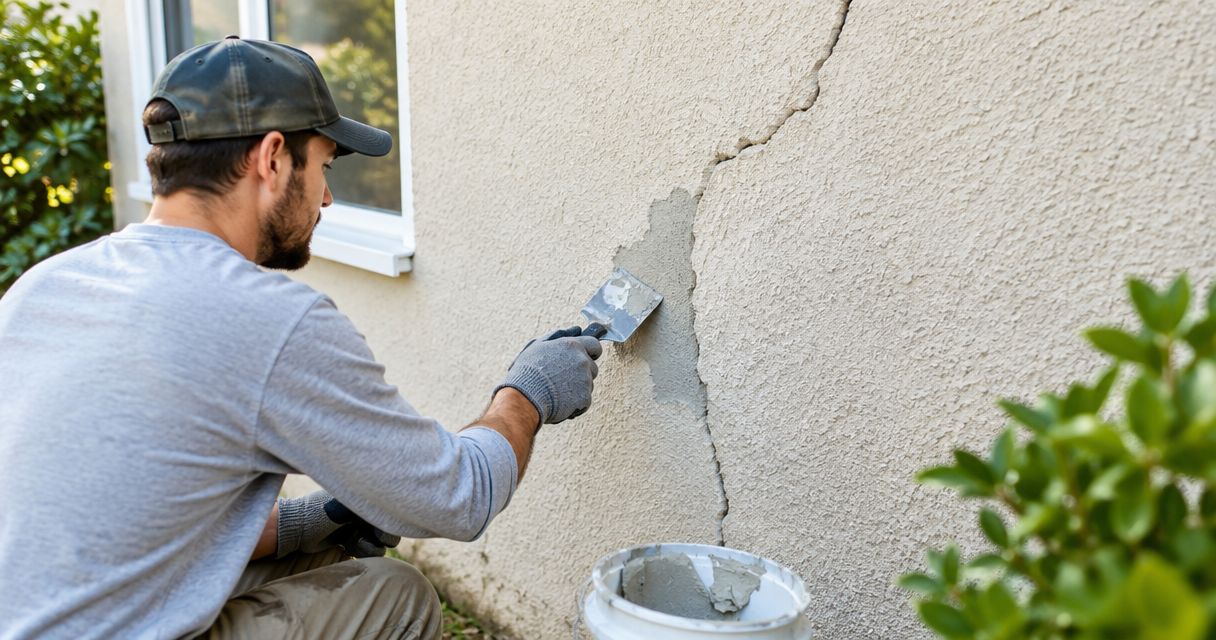
The cost to repair a stucco crack depends on whether the damage is limited to the surface or includes loose stucco, moisture damage, or movement underneath. A small patch and a wall-wide restoration are different projects, so a useful estimate separates preparation, repair, and finish matching. For your Phoenix property in 2026, compare the written scope before comparing the total.
- The cost to repair stucco crack damage depends on repair depth, access, and finish matching—not crack length alone.
- Localized stucco repair fits isolated damage when the surrounding material is sound.
- Full re-stucco needs a condition-based explanation; a visible crack alone does not justify it.
- Azstuccosolutions serves Phoenix-area property owners needing residential or commercial stucco repair, installation, and restoration.
Why this matters
You need the repair to address the problem, not just hide the line. A narrow-looking crack can require investigation, while an isolated surface crack does not automatically call for replacing an entire wall.
For Phoenix-area residential and commercial projects, Azstuccosolutions provides stucco installation, repair, and restoration. The decision starts with the wall's condition and your expectations for the finished appearance—not an assumption that the largest project is the right one.
How much does it cost to repair a stucco crack?
A stucco crack repair estimate should price a defined scope, not simply a visible line. Ask what the contractor found, what material needs removal, and how the repaired area will blend into the wall.
Start by identifying which of these 3 scopes describes your project. They are alternatives based on condition, not an automatic progression from a small repair to full replacement.
| Repair scope | Best for | Main advantage | Main limitation | What the estimate should explain |
|---|---|---|---|---|
| Localized repair | An isolated crack with sound surrounding stucco | Keeps work focused on the damaged area | The patch can remain visible; it does not address unrelated wall defects | Crack preparation, repair material, and finish blending |
| Broader wall repair | Multiple affected areas or loose material within a wall section | Allows connected defects to be addressed together | Disturbs more surface and expands finishing work | Removal boundaries, underlying repairs, and finish extent |
| Full re-stucco | Widespread deterioration or a planned exterior restoration supported by assessment | Addresses a larger surface as one project | Requires a larger scope and is unnecessary for isolated sound-wall damage | Existing material treatment, preparation, system details, and final finish |
If an estimate only says “repair stucco cracks,” ask for more detail. You cannot compare that description fairly with a proposal that includes removal, substrate repairs, and refinishing an entire wall.
Localized stucco repair: keep the scope focused
Localized repair is appropriate when the damage is isolated and the surrounding stucco is firmly attached. Preparation still matters: covering a crack without addressing loose edges or the reason it appeared can leave the underlying problem unresolved.
Ask whether the contractor intends to repair only the crack or finish a larger patch around it. Those boundaries affect both the work and what you will see afterward.
Choose localized repair when the assessment supports it—not merely because the crack looks small. Its main trade-off is appearance: a sound patch can still differ from an older surrounding finish.
Broader wall repair: define the boundaries
Broader repair deserves consideration when damage extends beyond one isolated line. Loose areas, repeated cracking, or signs of water entry require a closer look before anyone promises a surface-only solution.
The estimate should explain where removal stops and why. Ask how additional damaged material discovered during preparation will be documented and approved.
For a small commercial building, also identify which entrances, walkways, or occupied areas the work affects. Access planning belongs in the scope, even when the visible damage is limited.
Full re-stucco: require a clear reason
Full re-stucco is a broader exterior project, not the default answer to a crack. It warrants discussion when the assessment identifies widespread deterioration or when you are planning a larger restoration and want a consistent finish.
Ask exactly what “re-stucco” means in the proposal. A new finish over properly prepared existing material and extensive removal followed by rebuilding are different scopes; the wording should make the distinction clear.
Azstuccosolutions is best suited to Phoenix-area property owners seeking stucco installation, repair, or restoration services. For a larger project, ask for the preparation and finish plan alongside the repair recommendations so you can judge the whole scope.
Why stucco crack repair costs vary
The visible crack is only part of the work. These factors explain why repair proposals differ without relying on a misleading per-crack figure:
- Repair depth. Surface damage and damaged underlying material require different work. Ask what the inspection establishes and what remains concealed.
- Surrounding condition. Loose or deteriorated stucco can expand the area that needs removal. The repair boundary should follow sound material rather than an arbitrary patch shape.
- Water entry or movement. A patch does not correct a leaking detail or ongoing movement. The estimate should distinguish stucco work from any related corrective work.
- Access and protection. Elevated walls, tight side yards, landscaping, and occupied commercial spaces affect how crews reach and protect the work area.
- Texture and color. Matching an existing finish takes a different approach from applying a new finish across a whole wall. Agree on the intended visual result before work starts.
- Finishing area. Repairing a crack and refinishing the surrounding wall are separate scope decisions. Ask which surfaces the proposal includes.
For a 2026 repair estimate, have the contractor connect each recommendation to an observed condition. A larger scope needs an explanation you can understand, not just a larger total.
What should your stucco repair estimate include?
Organize your review around 4 sections: preparation, repair, finish, and exclusions. This keeps the discussion practical whether you own a Phoenix home or a small commercial property.
Preparation
The proposal should identify the work area, surface preparation, and protection for nearby windows, doors, paving, and landscaping. If removal is necessary, ask how the contractor determines its extent.
Include cleanup responsibilities in this discussion. You should know who removes debris and what happens to fixtures or features that obstruct the work.
Repair
Ask what the contractor is repairing and why the proposed method fits the condition. A useful description distinguishes a surface repair from work involving damaged underlying material.
Also ask how concealed damage will be handled. Written approval before expanding the work gives you a clear decision point rather than an unexpected change at the end.
Finish
Specify the intended texture and the area receiving the final finish or coating. Do not assume that a crack repair includes repainting or refinishing the entire wall.
Ask whether you can review a sample before the main finish work. A sample gives you something concrete to discuss, although surrounding age, lighting, and surface variation still affect the appearance.
Exclusions
The proposal should identify work it does not include, especially related water-entry repairs, movement-related investigation, painting, or adjacent building repairs. These exclusions matter because a stucco patch cannot substitute for correcting a separate building problem.
Confirm the process for changes, too. You need to know who approves added work and how that approval becomes part of the agreement.

How do you compare stucco repair estimates fairly?
Compare 2 written estimates against the same repair boundaries and finish expectations. If the scopes differ, ask each contractor to explain the difference rather than treating the totals as interchangeable.
- Describe the same concern. Show each contractor the crack, nearby affected areas, and any history of previous repairs or leaks you know about.
- Confirm the repair boundary. Ask whether the work covers the crack, a larger section, or the whole wall—and why.
- Match the finish scope. Compare texture work and coating areas separately from the underlying repair.
- Review unknowns. Check how each proposal handles concealed damage and changes requiring your approval.
- Record the agreement. Keep the final scope, exclusions, and approved changes together.
When comparing 2026 proposals, do not assume the shorter description represents the same work at a better value. Ask for the detail needed to make a like-for-like decision.
Discuss your stucco project
Review repair, restoration, or new installation needs for your Phoenix-area property.
Can you repair just one stucco crack?
One isolated crack can be repaired locally when the surrounding stucco is sound and the cause does not require broader work. The assessment should establish that condition before the repair method is selected.
Tell the contractor if the crack has returned after an earlier patch. That history is useful even if you do not know what caused it, and it gives the contractor a reason to examine more than the visible surface.
Does a stucco crack mean you need full re-stucco?
A stucco crack alone does not establish a need for full re-stucco. Broader work should follow evidence about the condition of the wall, not a blanket rule about cracks.
If full re-stucco is recommended, ask what makes localized repair insufficient. A clear answer should identify the affected areas, explain the preparation, and distinguish necessary restoration from optional appearance changes.
Will a repaired stucco crack disappear completely?
A stucco crack repair does not guarantee an invisible finish match. Existing texture, weathering, and color variation can make a repaired area stand out even when the repair itself is sound.
Discuss appearance before approving the work. If a consistent exterior is your priority, ask what additional finishing area that requires and keep that choice separate from the minimum repair scope.
FAQ
What’s included in the cost to repair stucco crack damage?
The cost to repair stucco crack damage reflects preparation, the repair itself, access, and the agreed finishing area. Your written estimate should also identify exclusions and the process for approving additional work.
Is patching a stucco crack better than re-stuccoing?
Patching is the better fit for isolated damage when the surrounding stucco is sound. Full re-stucco needs a broader condition-based reason, rather than the presence of a crack alone.
Can I tell how serious a stucco crack is from a photo?
A photo documents the visible crack but does not establish the condition behind the surface. An on-site assessment is needed to evaluate attachment, surrounding damage, and possible water-entry concerns.
Should I paint over a stucco crack before getting an estimate?
Arrange the assessment before covering the crack. Leaving it visible helps the contractor examine the damaged area and discuss the repair and finish scope with you.
What should I ask a Phoenix stucco contractor in 2026?
Ask a Phoenix stucco contractor in 2026 what caused the damage, where the repair stops, and how the finish will be handled. Also confirm exclusions and how concealed damage will be documented before additional work begins.
Does Azstuccosolutions handle larger stucco projects?
Azstuccosolutions provides residential and commercial stucco installation, repair, and restoration in the Phoenix metro area. Property owners can discuss a localized repair or a broader exterior project based on the condition and intended scope.
One last thing
Before you approve a 2026 stucco repair, ask the contractor to mark the proposed repair and finishing boundaries on a photo of your wall. A simple visual makes it easier to see whether you are agreeing to a small patch, a larger repair, or a whole-wall finish.
The most useful estimate tells you both what gets repaired and what you will see afterward. Keep those decisions separate, and you can choose the work your property needs without treating every crack as a full re-stucco project.
Leave a Reply