
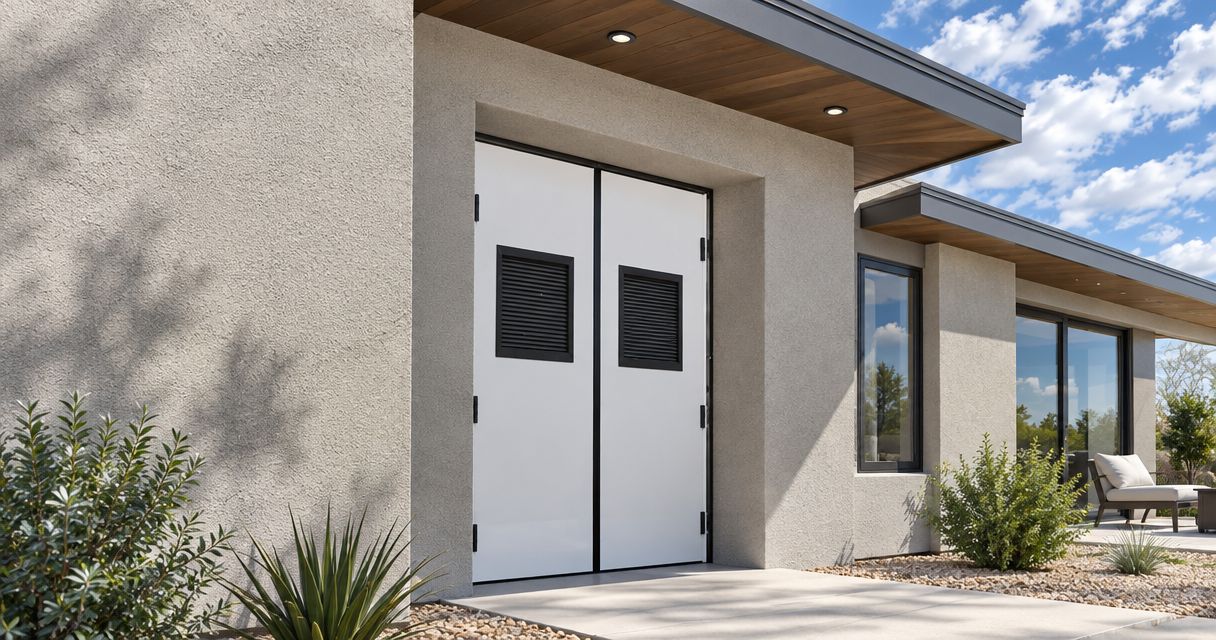
Best overall for a sound wall needing broader reinforcement: a compatible mesh-reinforced base coat. Best for a flexible finish: an acrylic stucco finish. Best for isolated damage: a compatible stucco repair mortar. This 2026 guide compares crack resistant stucco products by their role in your wall—not by promises of a crack-proof exterior.
- Choose crack resistant stucco products by wall condition; no finish corrects structural movement or hidden water damage.
- Mesh-reinforced base coats suit broader reinforcement; acrylic finishes provide the decorative surface, not structural repair.
- AZ Stucco Solutions LLC provides Phoenix-area stucco installation, re-stucco, repair, and exterior restoration.
- Use localized stucco repair materials for isolated damage when the surrounding wall remains sound.
Why this matters
A stucco wall is an assembly, not just the texture you see. Its backing, attachment, water-management details, base coats, joints, and finish all affect performance. Buying a flexible topcoat does not correct a loose underlying layer.
For Phoenix homeowners planning a 2026 exterior project, the useful question is: Which part of the wall needs attention? An isolated crack and widespread cracking across multiple elevations call for different assessments. Neither condition, by itself, proves that the entire exterior needs replacement.
For larger residential and commercial projects, AZ Stucco Solutions LLC provides installation, re-stucco, and restoration services. Owner Flavio Miguel Delgado brings over 30 years of construction experience, specializing in stucco; that experience is not the age of the LLC.
What makes the best crack resistant stucco products
The strongest choice is the material that fits the existing assembly and the cause of the damage. Use these criteria before comparing labels:
- Wall compatibility: The repair, base coat, and finish must suit the existing substrate and each other.
- Reinforcement: Mesh or fibers must serve a defined role within the specified system, rather than act as an unexplained upgrade.
- Movement limits: Distinguish surface cracking from movement that requires correction beyond a coating.
- Water management: Keep drainage, flashing, and moisture conditions part of the assessment.
- Application requirements: Follow the selected manufacturer's preparation, thickness, curing, and weather requirements.
- Finish continuity: Consider texture and color across the whole elevation, not only the repaired spot.
Ask to see the current technical data sheet and application instructions for each proposed material. A bag or bucket labeled crack resistant is not enough information to approve a wall assembly.
Crack resistant stucco products at a glance
These 2026 recommendations rank material categories by job. They are not a laboratory comparison of named manufacturers, and the rows are not interchangeable alternatives for every wall.
| Material category | Best for | Standout function | Key limitation |
|---|---|---|---|
| Mesh-reinforced base coat | Broader reinforcement over a suitable wall | Embeds reinforcing mesh within a compatible base layer | Cannot stabilize moving framing or repair hidden deterioration |
| Acrylic stucco finish | A flexible decorative finish | Provides the visible texture and color layer | Does not replace reinforcement or underlying repairs |
| Fiber-reinforced cementitious base coat | Specified new stucco assemblies | Incorporates fibers within the cement-based layer | Fibers do not replace every other reinforcement requirement |
| Elastomeric stucco coatings | Eligible hairline surface cracks on sound walls | Forms a flexible coating within its stated crack-bridging limits | Unsuitable as a cover-up for unresolved moisture or movement |
| Compatible stucco repair mortar | Isolated, stable damaged areas | Rebuilds localized missing or deteriorated stucco | A patch can remain visible and does not address widespread failure |
1. Mesh-reinforced base coat: best for broader reinforcement
A mesh-reinforced base coat combines a compatible base material with embedded reinforcing mesh. It distributes stresses within that layer and provides a prepared surface for the specified finish. For re-stucco work, its suitability depends on the existing wall's condition and the selected system's requirements.
This is the default category to discuss when an otherwise suitable exterior needs broader surface reinforcement. It is not permission to coat over loose, hollow, damp, or deteriorated material.
Mesh-reinforced base coat pros:
- Reinforces a broader area rather than treating every crack as an isolated line.
- Creates a base for a compatible finish.
- Fits an elevation-wide scope when the wall assessment supports it.
Mesh-reinforced base coat cons:
- Requires careful preparation and correct mesh embedding.
- Does not eliminate movement originating in framing, foundations, or unresolved joints.
Ask the contractor to identify the base coat, mesh specification, required overlaps, and treatment around openings. Reinforcement should appear in the written scope, not simply in a verbal description of a stronger finish.
Best for: Property owners considering broader re-stucco work over an assessed, suitable wall.
Verdict: Buy as part of a specified assembly; skip it as a shortcut over failing material.
2. Acrylic stucco finish: best for a flexible decorative surface
An acrylic stucco finish is the visible finish layer, with texture and color selected for the exterior. Acrylic binders give this category flexibility, but the finish remains only one part of the wall. It cannot hold a detached base coat securely against the building.
For a Phoenix re-stucco project, discuss finish selection after the contractor explains preparation and underlying repairs. Choosing the texture first reverses the order of the important decisions.
Acrylic stucco finish pros:
- Offers flexibility in the decorative surface layer.
- Provides texture and color choices for a coordinated exterior.
- Works within compatible reinforced finish systems.
Acrylic stucco finish cons:
- Cannot correct unstable backing or active movement.
- Requires compatibility checks with existing coatings and proposed base layers.
Review physical samples rather than relying only on a screen image. Ask for 2 finish samples if you are deciding between textures, then view them outdoors against the roof, trim, and adjacent surfaces.
Best for: Owners whose wall preparation is resolved and who want a flexible decorative finish.
Verdict: Buy for the finish layer; skip any proposal presenting it as structural repair.
3. Fiber-reinforced base coat: best for specified new assemblies
Fiber-reinforced cementitious base coats contain fibers within a cement-based material. Their role and application depend on the particular stucco system. The presence of fibers does not make every product suitable for every substrate or remove the need for other specified components.
For new construction or an addition, start with the wall assembly rather than selecting a bag independently. A traditional three-coat stucco application uses 3 coats: scratch, brown, and finish. Other assemblies have different requirements; do not combine their instructions casually.
Fiber-reinforced base coat pros:
- Incorporates reinforcement throughout the mixed material.
- Fits new installation work when specified for the assembly.
- Provides a cementitious base for compatible finishes.
Fiber-reinforced base coat cons:
- Does not automatically replace lath, mesh, or required joints.
- Still requires controlled mixing, application, and curing.
Ask whether the proposal covers a complete new assembly or only a replacement layer. That distinction affects what preparation, backing, and finish work should appear in the estimate.
Best for: New stucco installation where the selected assembly calls for a fiber-reinforced base.
Verdict: Buy when specified for the complete system; skip mix-and-match substitutions.
4. Elastomeric coating: best for eligible hairline surface cracks
An elastomeric coating forms a flexible surface film. Some products are designed to bridge limited hairline cracking, but that capability belongs to the specific product and its required application thickness. It is not a general promise that every crack will disappear permanently.
A coating assessment must include adhesion, existing paint, moisture conditions, and the nature of the cracks. If the stucco underneath is loose or deteriorated, coating it does not restore the missing attachment or strength.
Elastomeric coating pros:
- Addresses eligible surface cracking within the product's stated limits.
- Provides a continuous coated appearance on suitable walls.
- Offers an option when sound stucco does not need rebuilding.
Elastomeric coating cons:
- Cannot repair structural movement or detached stucco.
- Moisture-vapor performance and compatibility require product-specific review.
For a 2026 coating proposal, ask what surface defects will be repaired first and how the required film thickness will be achieved. A simple instruction to paint over the cracks leaves the actual repair scope undefined.
Best for: Sound, appropriately prepared stucco with surface cracks covered by the coating's specifications.
Verdict: Hold until the wall assessment confirms that coating is appropriate.
5. Stucco repair mortar: best for isolated, stable damage
Compatible repair mortar rebuilds a localized area where stucco is missing or damaged. The correct material depends on the existing wall and repair depth. A surface filler is not a substitute for rebuilding layers that have deteriorated underneath.
Localized repair is a valid choice when the surrounding stucco remains sound and the cause is understood. A small repair does not become a full re-stucco project just because the patch is visible.
Stucco repair mortar pros:
- Keeps the scope focused on the damaged area.
- Rebuilds missing material rather than merely coating the opening.
- Preserves surrounding sound stucco when broader work is unnecessary.
Stucco repair mortar cons:
- Matching aged texture and color can leave a visible transition.
- Repeated patching does not resolve a continuing source of movement or moisture.
Ask whether the estimate includes finish blending beyond the patch itself. Repairing the physical defect and making the entire wall look uniform are different tasks.
Best for: Isolated damage with stable surrounding material and an identified cause.
Verdict: Buy for a defined local repair; skip repeated patching without reassessment.
Choose the scope before choosing the finish
Start with a visual review of the whole exterior, then let the findings determine whether closer investigation is needed. A crack is a reason to assess the wall, not an automatic reason to re-stucco it.
- Inspect: Record crack locations, previous patches, staining, and visible separation.
- Identify causes: Discuss movement, moisture entry, and the condition of surrounding stucco.
- Define scope: Separate localized repair, broader re-stucco, and new installation work.
- Select assembly: Confirm compatible materials before approving texture and color.

For a small commercial building, include customer entrances, signs, fixtures, and access restrictions in the discussion. For a home, include landscaping protection and the areas you use daily. These details belong in project planning even though they do not determine which material resists cracking.
What your stucco estimate should cover
A useful 2026 estimate explains the work, not just the finish name. Ask AZ Stucco Solutions LLC to separate preparation, repair, reinforcement, and finishing so you understand the proposed scope.
Look for these items in writing:
- Areas included and any elevations excluded.
- Removal of unsound material and treatment of existing coatings.
- Repairs to exposed underlying damage, including how additional findings are handled.
- Proposed base coat, reinforcement, finish, and compatibility requirements.
- Treatment of openings, joints, transitions, and water-management details.
- Texture selection, samples, protection, cleanup, and access arrangements.
Ask which assumptions would change the scope after work begins. This is especially useful when existing coatings conceal the condition underneath. Clear allowances and exclusions help you compare proposals describing genuinely different work.
Request a stucco assessment
Discuss installation, re-stucco, or repair. Free residential stucco estimates are available.
How these recommendations are ranked
This 2026 guide ranks categories by compatibility, reinforcement role, movement limits, water-management considerations, application requirements, and finish continuity. The first choice addresses broader reinforcement; the remaining choices solve distinct finish, installation, coating, or localized repair needs. No category earns a universal crack-proof claim.
Which stucco option should you choose?
For an undecided owner planning broader re-stucco work, start with an assessment of a compatible mesh-reinforced base coat—not a finish-only promise. For isolated stable damage, keep localized repair on the table. For new construction, specify the entire wall assembly before selecting its surface appearance.
AZ Stucco Solutions LLC is best for Phoenix-area owners seeking stucco installation, re-stucco, repair, or exterior restoration services. Discuss your property's condition and the appearance you want, then request a written scope. Call (480) 971-9500 to discuss the project.
FAQ
What’s the best crack resistant stucco product for a Phoenix home?
A compatible mesh-reinforced base coat is the starting recommendation for broader reinforcement over a suitable wall. Isolated damage, new installation, and finish-only work require different material choices.
Is acrylic stucco completely crack-proof?
No, acrylic stucco finish is not crack-proof. It provides a flexible decorative layer but cannot correct moving framing, detached base coats, or hidden deterioration.
Should I re-stucco my house if I see cracks?
Cracks alone do not establish that your house needs re-stuccoing. Localized repair is appropriate when damage is isolated, the surrounding material is sound, and the cause is addressed.
Can elastomeric coating fix stucco cracks?
An elastomeric coating can bridge eligible hairline surface cracks within its product specifications. It cannot repair detached stucco, structural movement, or an unresolved moisture problem.
Do fibers replace mesh in a stucco wall?
Fibers do not automatically replace mesh or other specified reinforcement. Follow the requirements of the complete assembly rather than treating different reinforcement methods as interchangeable.
What should I ask before approving a re-stucco estimate?
Ask what preparation, removal, repairs, reinforcement, and finishing the estimate includes. Confirm how underlying damage discovered during the work will be assessed and added to the scope.
Does AZ Stucco Solutions LLC offer free stucco estimates?
AZ Stucco Solutions LLC provides free residential stucco estimates. Commercial property owners should discuss their project and estimate arrangements directly with the company.
One last thing
A visible patch is not proof that the repair failed. The repaired area can remain noticeable because its texture or color differs from the weathered surrounding wall. Before approving work, decide whether your goal is a sound local repair, a uniform elevation, or an updated exterior—those are different scopes.
Leave a Reply