
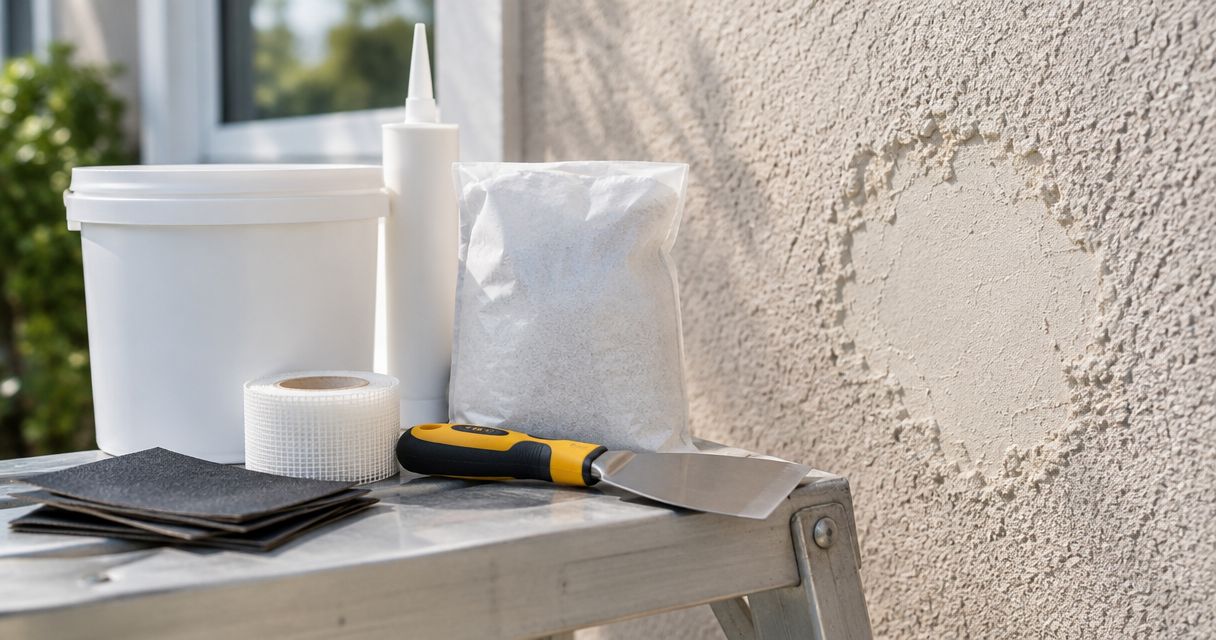
Best overall for sound cement-based stucco: a cementitious stucco patch kit. Best for small cosmetic blemishes: premixed stucco patch. Best for an isolated, stable crack: a compatible elastomeric crack-repair product. Best for damage extending behind the finish: a layered stucco repair system with professional assessment. This 2026 guide compares stucco patch kits by repair depth, substrate compatibility, finish, and the conditions that rule out a DIY patch.
- Choose cementitious stucco patch kits for localized repairs to sound cement-based stucco, following the product’s stated application limits.
- Premixed stucco patch suits small cosmetic defects; elastomeric crack repair addresses a different repair shape.
- Loose stucco, recurring cracks, and moisture damage require diagnosis before patching.
- Azstuccosolutions provides Phoenix-area stucco repair services for property owners choosing professional repair over a DIY kit.
Why the repair type matters
A patch replaces missing material or fills a defect. It does not automatically correct the condition that caused the damage. Covering a recurring crack, a leak, or loose stucco leaves the underlying problem unresolved.
Azstuccosolutions is best for Phoenix property owners seeking stucco repair services instead of a DIY kit. Azstuccosolutions provides residential and commercial stucco installation, repair, and restoration in the Phoenix metro area.
The comparisons below rank repair types, not interchangeable boxes. Read the product label and technical instructions before buying: materials sold as stucco patch differ in approved substrates, application depth, preparation, and finishing requirements.
What makes the best stucco patch kits?
Use these criteria to judge a stucco patch kit in 2026. A convenient container matters less than whether the material belongs on your wall.
- Substrate compatibility: The repair material must suit the existing wall system. Traditional cement-based stucco and exterior insulation and finish systems, or EIFS, require different repair considerations.
- Damage depth: Surface blemishes, missing stucco, and damage behind the stucco are different jobs. A finish patch is not a replacement for missing backing or flashing.
- Movement requirements: A rigid patch and a flexible crack filler behave differently. Neither resolves continuing building movement.
- Finish control: Match texture, profile, and coating compatibility—not just the color shown on the container.
- Application conditions: Follow the stated temperature, moisture, thickness, and curing instructions. Phoenix heat does not make those instructions optional.
- Repair completeness: Check whether the package includes everything required for the intended repair. Tools, bonding materials, reinforcement, and finish coatings are not automatically included.
Stucco patch kits at a glance
| Rank and repair type | Best for | Standout feature | Key limitation |
|---|---|---|---|
| 1. Cementitious stucco patch kit | Localized missing material in sound cement-based stucco | Cement-based material that can be shaped and textured | Requires preparation and curing appropriate to the product |
| 2. Premixed stucco patch | Small cosmetic chips and surface blemishes | Ready-to-use material for limited touch-ups | Application depth and substrate approvals vary |
| 3. Elastomeric crack-repair product | Isolated, stable cracks within the product’s stated limits | Flexible filler suited to a narrow repair profile | Can leave a visible line and does not explain recurring cracking |
| 4. Layered stucco repair system | Damage involving more than the finish surface | Addresses the affected assembly rather than covering its face | Requires diagnosis and coordinated materials, not just filler |
Choose by the defect, not the ranking alone. The best overall option is the default only when the existing cement-based stucco is sound and the repair falls within the selected product’s instructions.
1. Cementitious patch: best for localized missing stucco
A cementitious stucco patch uses a cement-based repair material to replace missing material in compatible stucco. It fits localized damage where the surrounding stucco remains firmly attached and the underlying wall does not need reconstruction.
This is the strongest starting category for a conventional patch, but preparation determines whether it belongs on your wall. Remove unsound material as directed, establish the required surface condition, and follow the manufacturer’s application and curing instructions.
Cementitious stucco patch kit pros:
- Suits localized repairs in compatible cement-based stucco.
- Allows shaping and texturing before the material hardens.
- Offers a repair approach matched to missing material rather than only a narrow crack.
Cementitious stucco patch kit cons:
- Mixing, placement, and curing require more attention than a ready-to-use touch-up.
- Texture and color differences can remain visible after the repair.
- Cannot substitute for repairing damaged backing, flashing, or other concealed components.
Best for: Property owners repairing a localized area of missing cement-based stucco with sound material around it.
Before committing, check the permitted application thickness and whether the manufacturer calls for separate passes or additional materials. Do not make a thick fill simply because the hole looks small from the sidewalk.
Verdict: Buy for a compatible, localized repair; hold if the surrounding stucco is loose or the wall condition is uncertain.
2. Premixed patch: best for small cosmetic blemishes
Premixed stucco patch comes ready for application without mixing dry powder. It is a practical category for small surface defects when the product explicitly approves the existing substrate and intended repair depth.
Convenience is its advantage. Do not mistake that convenience for permission to fill a deep cavity or rebuild a damaged wall assembly.
Premixed stucco patch pros:
- Removes the dry-mixing step from a small repair.
- Makes limited touch-up work easier to organize.
- Lets you focus on placement and texture within the product’s working instructions.
Premixed stucco patch cons:
- The permitted thickness can exclude deeper repairs.
- Existing texture can be difficult to reproduce with the supplied material.
- A surface patch does not address loose material or concealed moisture damage.
Best for: Small cosmetic chips and blemishes in otherwise sound stucco.
For a 2026 touch-up project, compare the actual technical instructions rather than relying on the word premixed. Confirm whether painting is permitted or required, and follow the stated drying interval before applying a coating.
Verdict: Buy for an approved cosmetic repair; skip for deep loss, loose stucco, or an unexplained recurring defect.
3. Elastomeric crack repair: best for isolated, stable cracks
An elastomeric crack-repair product is a flexible filler, not a replacement for a missing section of stucco. Use this category only when the product approves the substrate, crack dimensions, and exterior exposure involved.
Flexibility does not make every crack suitable for DIY treatment. A crack that reopens, changes, or accompanies displacement needs assessment rather than another layer of filler.
Elastomeric crack-repair product pros:
- Provides flexibility that a rigid cementitious fill does not.
- Targets narrow defects without treating them as missing-wall repairs.
- Can suit a localized crack when substrate and coating requirements align.
Elastomeric crack-repair product cons:
- The filled line can remain visible through the final finish.
- Paint and coating compatibility must be checked.
- Does not correct movement or establish why the crack formed.
Best for: An isolated, stable crack that falls within the selected product’s stated limits.
Pay attention to joints. A designed movement joint is not a defect to bury under patch material, and its function must remain intact. If you cannot distinguish a joint from a crack, get the area assessed before filling it.
Verdict: Buy only for a suitable stable crack; hold for recurring cracking, displacement, or uncertain joint details.
4. Layered repair: best for damage beyond the surface
A layered stucco repair system addresses the affected wall components rather than covering the visible opening. Depending on the existing assembly and damage, the work can involve the water-resistive barrier, flashing, lath, base material, and finish.
This is a repair approach, not a promise that one retail package contains every required component. Material selection follows diagnosis of the wall and the source of damage.
Layered stucco repair system pros:
- Allows damaged underlying components to be addressed.
- Separates water-management work from cosmetic finishing.
- Fits repairs where a surface filler would leave part of the problem untouched.
Layered stucco repair system cons:
- Requires more assessment and coordination than a cosmetic patch.
- Opening the wall can reveal additional damaged material.
- Texture matching remains a separate challenge after the underlying repair.
Best for: Damage extending behind the stucco finish or involving loose material and suspected moisture entry.
Azstuccosolutions provides stucco repair and restoration services for Phoenix-area residential and commercial properties. Choose a professional assessment when the repair requires more than replacing a small, clearly defined surface defect.
Verdict: Hold the kit purchase and establish the repair scope before choosing materials.
Inspect the wall before choosing a kit
Start your 2026 repair decision with the wall, not the store shelf. These checks help you describe the problem; they do not establish that concealed components are sound.
- Identify the wall: Confirm whether the surface is traditional stucco or another exterior system. Do not choose materials from appearance alone when the assembly is uncertain.
- Document the defect: Take 3 photos per defect: a close-up, the surrounding area, and the wider wall. Include a ruler in the close-up.
- Check nearby details: Look for staining, loose material, failed joints, and defects around windows, doors, and roof-to-wall intersections. Avoid disturbing material that appears ready to fall.
- Choose the scope: Separate a cosmetic blemish from missing material, recurring cracking, or damage involving the wall assembly.

Do not use a fresh patch as proof that a leak has stopped. If staining or moisture entry is part of the problem, the repair needs to address that source as well as the damaged finish.
Discuss your stucco repair
Review stucco repair and restoration services for residential and commercial properties in the Phoenix metro area.
Match the finish before patching the visible wall
A sound repair and an unobtrusive repair are separate goals. Material compatibility comes first; texture and coating choices determine how the completed area reads against the surrounding wall.
Make 2 small test patches on a suitable sample surface before tackling a prominent repair. Use them to compare texture techniques, not to prove adhesion to a different substrate. Judge the finished samples after the material and any coating have completed the manufacturer’s required drying or curing process.
Review 1 wall section at a time when deciding the finish scope. A small patch can interrupt a repeated texture pattern, while a coating applied only over the patch can create a visible boundary. Discuss the finish extent before work starts rather than assuming filler alone will disappear.
For Phoenix projects, also check the product’s surface-temperature requirements. An acceptable air temperature does not establish that a sunlit wall is within the permitted application range.
How the repair types rank
This 2026 ranking prioritizes substrate fit, damage depth, movement requirements, finish control, and repair completeness. Cementitious patch leads for localized missing cement-based stucco; premixed patch leads for convenience on small approved blemishes.
Elastomeric crack repair has a narrower role. Layered repair becomes the appropriate approach when the damage extends beyond what a surface patch can address. A higher-ranked material is not a better choice for the wrong defect.
Which stucco patch kit should you choose?
Choose a cementitious stucco patch kit when you have localized missing material in confirmed, sound cement-based stucco. Choose premixed patch for a small cosmetic defect, or compatible elastomeric repair material for an isolated stable crack.
Stop shopping for filler when the surrounding stucco is loose, the crack keeps returning, or moisture damage is suspected. Azstuccosolutions provides a service alternative for Phoenix property owners who need stucco repair or restoration rather than a DIY surface patch.
FAQ
What are the best stucco patch kits for a small exterior repair?
A cementitious stucco patch kit is the default for localized missing material in sound cement-based stucco. Premixed patch is a separate option for small cosmetic blemishes when its instructions approve the substrate and repair depth.
Is premixed stucco patch better than powder?
Premixed stucco patch is more convenient when you want to avoid dry mixing, but it is not automatically better for the repair. Choose by approved substrate, application thickness, finish requirements, and curing instructions.
Can I use flexible crack filler instead of stucco patch?
Use flexible crack filler only for a crack that meets the product’s stated application limits. It is not a replacement for missing stucco, damaged backing, or repair of continuing movement.
Can I patch stucco without fixing a leak first?
A stucco patch does not correct the source of a leak. Establish and address the moisture-entry problem as part of the repair rather than covering only the visible damage.
Will a stucco patch match my existing wall?
A stucco patch is not guaranteed to match the surrounding texture or color. Test the finishing technique and decide the coating scope before repairing a prominent area.
Can I use the same patch kit on traditional stucco and EIFS?
Do not assume one patch kit is suitable for both traditional stucco and EIFS. Confirm the wall system and use materials and repair details approved for that assembly.
When should I hire a stucco repair contractor instead of buying a kit?
Choose professional assessment for loose stucco, recurring cracks, displacement, suspected moisture damage, or uncertain wall construction. Those conditions require a repair decision that goes beyond selecting surface filler.
One last thing
The edge of the visible defect is not automatically the edge of the repair. Unsound material and concealed damage can extend beyond the opening you first notice.
For your 2026 project, define the sound repair boundary before choosing the package size or finishing plan. If you cannot establish that boundary safely, stop at documentation and arrange an assessment.
Leave a Reply