
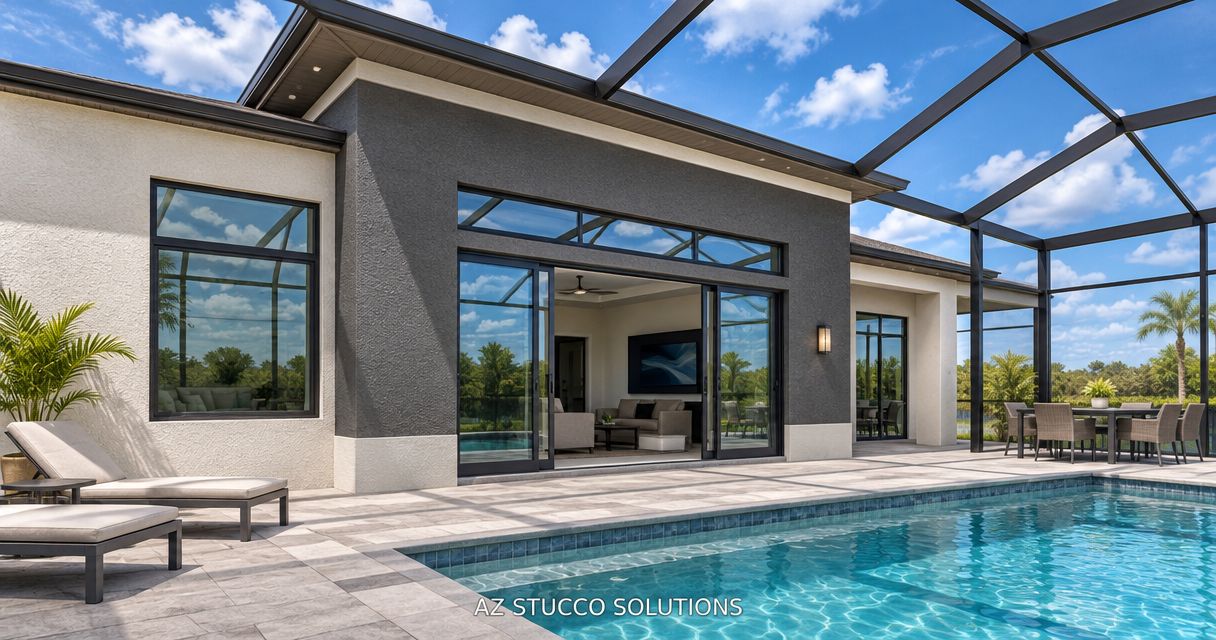
Best overall: fine sand float. Best for a traditional courtyard: light lace. Best for a contemporary backdrop: smooth trowel. Best for matching an existing coarse wall: dash. This 2026 guide compares stucco finishes for pool enclosures on appearance, cleaning access, repair visibility, and the preparation your walls need.
- Fine sand float is the default choice among stucco finishes for pool enclosures when you want restrained texture.
- Smooth trowel suits contemporary pool walls but makes surface irregularities and repairs more noticeable.
- AZ Stucco Solutions LLC provides residential and commercial stucco installation, repair, and restoration in the Phoenix area.
- Choose the wall system and address moisture problems before choosing a decorative stucco texture.
Why this matters around a Phoenix pool
A pool enclosure finish has to work beside water, landscaping, outdoor furniture, and strong daylight. Texture changes how the wall looks, how easily you can reach its recesses during cleaning, and how noticeable a later patch becomes. It does not replace proper wall construction.
For a 2026 renovation, start by separating appearance from condition. A wall with a dated texture needs a different assessment from a wall with loose material, persistent dampness, or recurring cracks.
AZ Stucco Solutions LLC handles residential and commercial stucco installation and restoration in the Phoenix area. Owner Flavio Miguel Delgado brings over 30 years of construction experience, specializing in stucco, to that work.
Here, pool enclosure means a stucco-clad wall surrounding or bordering the pool area. It does not mean applying stucco to screen mesh, pool interiors, or surfaces that remain underwater. Fully enclosed indoor pools also require attention to humidity and ventilation beyond the decorative finish.
What makes the best stucco finishes for pool enclosures?
Judge the finish against the actual wall, not a small texture photograph. For a 2026 project, use these criteria before approving the scope:
- Wall condition: Confirm whether the existing surface is sound enough to receive the proposed work. Texture cannot stabilize loose material.
- Cleaning access: Consider how easily you can reach grooves, ledges, and recesses without damaging the finish.
- Appearance in daylight: Review texture beside the pool, where changing light makes shadows and unevenness easier to see.
- Repair visibility: Decide whether a future localized patch would disrupt the look you want.
- Architectural fit: Connect the enclosure to the house or commercial building rather than treating it as a separate design project.
- System compatibility: Ask which finish material suits the existing base and what preparation the manufacturer requires.
A texture is the surface pattern; a stucco system is the wall assembly beneath it. Sand, lace, smooth, and dash describe appearance, not equivalent moisture protection or identical installation methods.
Pool enclosure finishes at a glance
| Finish | Best for | Standout feature | Key limitation |
|---|---|---|---|
| Fine sand float | A restrained, versatile pool surround | Small, evenly distributed texture | Patches still need careful texture and color matching |
| Light lace | A traditional courtyard | Raised pattern with visible relief | Recesses take more attention during cleaning |
| Smooth trowel | A contemporary architectural backdrop | Minimal surface pattern | Irregularities and repairs are more conspicuous |
| Dash | Matching an existing coarse enclosure | Pronounced aggregate texture | Rough relief is harder to clean and uncomfortable to brush against |
These are finish choices, not interchangeable specifications. Ask to see the actual material and application proposed for your property; names alone do not define the finished result.

1. Fine sand float: best for a versatile pool surround
Fine sand float creates a granular surface without a pronounced decorative pattern. It gives a Phoenix pool wall some texture while keeping the visual focus on the water, planting, and surrounding architecture.
Choose it when you want a coordinated finish across a large enclosure without committing to a strongly rustic or highly polished appearance. The sample still matters: aggregate size and application affect how fine the finished wall actually looks.
Fine sand float pros:
- Restrained texture works with varied architectural styles.
- Shallow relief is more accessible during cleaning than deep texture.
- Provides a consistent visual direction for broader re-stucco work.
Fine sand float cons:
- Local repairs can remain visible through differences in texture or color.
- A fine surface does not conceal poor preparation or an uneven base.
Best for: Homeowners planning a full enclosure refresh who want texture without a dominant pattern.
Ask the contractor to show how corners, returns, and repaired areas will receive the same finish treatment. A good-looking central wall panel is not enough if the surrounding edges remain visibly different.
Verdict: Buy into fine sand float as the default design choice after confirming wall condition and approving a sample.
2. Light lace: best for a traditional courtyard
Light lace uses raised areas and recessed spaces to create a patterned surface. It suits a courtyard where you want visible texture rather than a flat architectural backdrop.
Keep the emphasis on light. A restrained sample and a heavily textured sample can both be described casually as lace, yet look very different beside the same pool. Judge the pattern at full viewing distance, not only with your face close to the wall.
Light lace pros:
- Adds relief and shadow to broad wall surfaces.
- Fits a traditional courtyard design direction.
- Offers a useful starting point when coordinating with existing lace-textured walls.
Light lace cons:
- Recesses require more attention when removing accumulated dirt.
- Matching an existing hand-applied pattern takes careful sample work.
Best for: A traditional pool courtyard where the enclosure should share the character of the house.
For a full re-stucco project, define how pronounced the texture should be before work begins. Descriptions such as subtle or medium are less useful than an approved physical sample.
Verdict: Buy into light lace for traditional character; skip a heavy version if easy cleaning is your priority.
3. Smooth trowel: best for a contemporary backdrop
Smooth trowel minimizes visible texture so the wall reads as a broad surface. It suits a contemporary pool area with simple shapes and an intentionally restrained appearance.
Smooth does not mean perfectly uniform under every lighting condition. Trowel marks, surface variation, and changes beneath the finish become more apparent when there is little texture to interrupt your view.
Smooth trowel pros:
- Keeps the wall visually quiet beside contemporary architecture.
- Avoids deep texture recesses during routine cleaning.
- Lets wall shape and color carry the design.
Smooth trowel cons:
- Makes unevenness and localized repairs easier to notice.
- Requires clear agreement about acceptable surface variation.
Best for: Property owners who value a minimal appearance and accept that close-up variations can remain visible.
Walk the enclosure when sunlight travels across its face. Ask the contractor to explain which existing irregularities the proposed preparation addresses and which remain outside the scope. Do not assume the word smooth includes rebuilding the wall plane.
Verdict: Buy into smooth trowel for a deliberate contemporary design; hold if you expect invisible patches or a flawless surface.
4. Dash: best for matching an existing coarse enclosure
Dash produces a pronounced textured surface through the application of finish material onto the wall. Consider it when retaining the character of an existing coarse enclosure matters more than creating a new, restrained look.
For an entirely new pool surround, evaluate where people will sit, walk, or lean before choosing pronounced relief. Texture that looks appropriate from across the pool can feel abrasive at a narrow seating area.
Dash pros:
- Provides a clear coarse-texture design direction.
- Helps coordinate new work with an existing dash finish.
- Creates stronger surface shadow than a nearly smooth finish.
Dash cons:
- Rough relief makes cleaning recesses less straightforward.
- Abrasive texture is a poor fit where people regularly brush against the wall.
Best for: An existing property where a coarse enclosure finish needs visual continuity.
Matching dash requires more than choosing the same general texture name. Review the aggregate appearance, distribution, and color together before approving a repair or extension.
Verdict: Buy into dash for an intentional match; skip it as the default beside close-contact seating.
Decide between repair, re-stucco, and new installation
Not every crack calls for re-stuccoing. A localized defect in otherwise sound material needs a focused assessment, not an automatic recommendation to replace the entire finish.
A broader assessment is appropriate when you see widespread separation, repeated failed patches, persistent staining, or deterioration across several wall areas. Those observations identify questions to investigate; they do not establish the cause by themselves.
Use the project goal to organize the conversation:
- Localized repair: Address a defined defect while retaining the surrounding finish. Discuss how visible the repair is likely to remain.
- Full re-stucco: Evaluate the existing surface and define preparation across the enclosure before selecting a consistent new finish.
- New installation: Specify the wall assembly, interfaces, and finish together rather than selecting texture in isolation.
Pool splash and irrigation deserve attention, but a decorative coat is not a substitute for correcting a leak or unsuitable drainage detail. Tell the contractor where the wall stays wet, where stains return, and which repairs have already been attempted.
What your pool enclosure estimate should cover
Your 2026 estimate should describe the work, not just name a texture. AZ Stucco Solutions LLC provides stucco services for larger residential and commercial projects; ask for a scope that distinguishes preparation, restoration, and finish application.
Look for clear answers in these areas:
- Included surfaces: Identify wall faces, columns, returns, caps, and adjoining areas included in the work.
- Preparation: Describe removal of loose material, treatment of existing coatings, and repairs required before the finish.
- Water-related details: Identify who addresses drainage concerns, penetrations, irrigation exposure, and adjoining construction.
- Finish selection: Record the material, texture sample, color selection, and intended appearance.
- Site protection: Explain protection for pool water, coping, decking, equipment, landscaping, and nearby furniture.
- Project responsibilities: Clarify access, cleanup, excluded work, and how changes to the scope are documented.
For residential work, AZ Stucco Solutions LLC offers free stucco estimates. Commercial property owners should request an estimate for their specific scope without assuming the same estimate terms apply.
Request a pool enclosure assessment or call (480) 971-9500. Describe whether you are planning new installation, a full re-stucco, or an assessment of existing damage.
How to approve a finish without guessing
Request 2 sample panels in the finishes you are seriously considering. Use the proposed finish material and agree with the contractor on a suitable sample location or separate sample board.
Review each sample from 3 viewing positions: near the wall, from your main seating area, and across the pool. These are practical review steps, not performance standards. They help you judge both close-up texture and the overall appearance.
Look in direct daylight and shade before approving the sample. Include the person responsible for the final design decision, and record which sample governs the work. A verbal request for something like the neighboring house leaves too much unresolved.
How the finishes rank
This ranking favors restrained texture, accessible cleaning, architectural fit, and realistic repair expectations. It is a design decision guide, not a claim that one texture lasts longer in every wall system.
Fine sand float takes the default position because it balances visible texture with a relatively quiet appearance. Light lace, smooth trowel, and dash each serve a more specific design goal. Preparation and installation remain separate decisions from that ranking.
Which finish should you choose?
Choose fine sand float unless your architecture or existing enclosure gives you a clear reason to choose something else. Pick light lace for a traditional courtyard, smooth trowel for a contemporary backdrop, or dash when matching a coarse existing finish is the priority.
AZ Stucco Solutions LLC is best for Phoenix-area property owners seeking stucco installation, re-stucco, or restoration rather than a finish-only product purchase. Start with the wall's condition, then settle the appearance through samples and a written scope.
FAQ
What’s the best stucco finish for a pool enclosure?
Fine sand float is the default recommendation for a restrained, versatile pool enclosure finish. Choose a different texture when your architecture, existing finish, or close-contact areas call for it.
Is smooth stucco better than textured stucco around a pool?
Smooth stucco is better for a minimal appearance, not automatically better for every pool wall. It has fewer deep recesses but makes surface irregularities and localized repairs more noticeable.
Does a stucco finish waterproof my pool enclosure wall?
A decorative stucco finish is not a substitute for appropriate wall construction and water-management details. Address leaks, drainage concerns, and incompatible materials before applying a new finish.
Do cracks mean my whole pool enclosure needs re-stuccoing?
No, a localized crack does not automatically require full re-stuccoing. Assess its cause and the surrounding material before choosing between a focused repair and broader restoration.
Can I apply a new texture over my existing pool wall?
A new texture requires an assessment of the existing surface and the proposed finish system. Loose material, existing coatings, and compatibility determine the necessary preparation.
Can I use these finishes inside an enclosed indoor pool room?
An indoor pool room needs a wall specification suited to its humidity and ventilation conditions. Do not choose the assembly from decorative texture alone.
How do I get a pool enclosure stucco estimate in Phoenix?
Contact AZ Stucco Solutions LLC at (480) 971-9500 and describe the wall condition and project goal. Free residential stucco estimates are available; ask separately about the estimate process for commercial work.
One last thing
For a 2026 pool enclosure project, check the wall from the chair where you actually spend time. A texture you like at arm's length can look entirely different across the water. Approve the sample from that everyday viewpoint before committing to the full enclosure.
Leave a Reply