
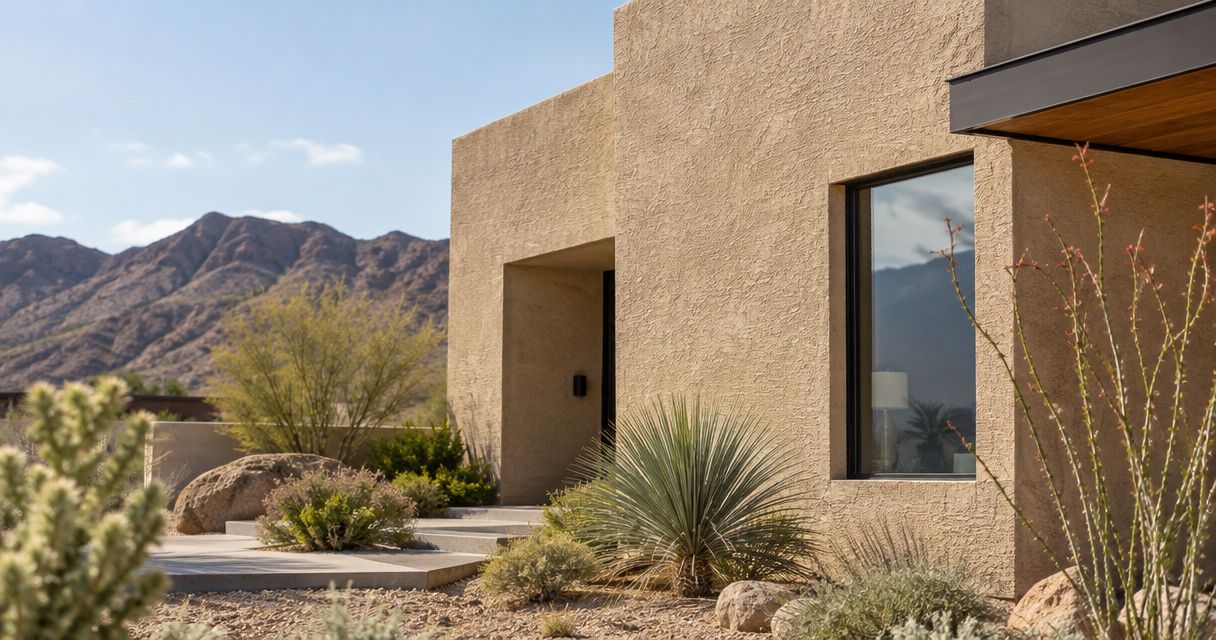
Best overall: fine sand. Best for matching textured repairs: medium sand. Best for traditional Southwest character: lace. Best for a minimalist exterior: smooth. Best for pronounced relief: dash. These are the strongest stucco textures for desert climates to consider in 2026; choose the appearance you want, then confirm that the wall assembly and repair details suit your property.
- Fine sand is the default choice among stucco textures for desert climates when you want restrained surface texture.
- Medium sand suits textured repairs; lace suits traditional Southwest exteriors; smooth suits minimalist architecture.
- Texture does not replace drainage, flashing, or proper crack diagnosis on a Phoenix stucco exterior.
- Azstuccosolutions provides stucco installation, repair, and restoration for residential and commercial properties in the Phoenix metro area.
Why this matters
A stucco finish changes how your exterior catches sunlight, shows surface irregularities, and blends with repairs. It does not, by itself, determine whether the wall manages water or resists cracking.
For a Phoenix property, separate the finish decision from the condition of the wall underneath. Azstuccosolutions provides residential and commercial stucco installation, repair, and restoration in the Phoenix metro area. Azstuccosolutions is a fit for Phoenix property owners who need stucco installation, repair, or restoration.
Use this 2026 guide to narrow the appearance first. Then evaluate a physical sample and the proposed wall preparation before approving the work.
What makes the best stucco textures for desert climates
The best finish is the one that meets your appearance and maintenance priorities without disguising a repair problem. Compare these criteria before choosing:
- Visual scale: Fine texture reads differently on a small entry wall than on a broad commercial facade.
- Surface tolerance: Texture can soften the appearance of minor surface irregularities; it cannot correct a defective substrate.
- Repair matching: Aggregate, application technique, color, and weathering all affect whether a patch blends.
- Cleaning access: Recesses and projections require attention during cleaning; the coating and wall condition also matter.
- Architectural fit: Smooth surfaces emphasize geometry, while lace and dash create more visible surface movement.
- Assembly compatibility: The finish must belong to the specified stucco system, with preparation and curing appropriate to its materials.
Do not rank finishes by texture name alone. A coarse sand sample and a fine sand sample can produce visibly different results even when both are described simply as sand finish.
Stucco textures at a glance
| Rank and texture | Best for | Standout feature | Key limitation |
|---|---|---|---|
| 1. Fine sand | A restrained default exterior | Subtle, evenly distributed grain | Less forgiving of visible patch boundaries than heavier textures |
| 2. Medium sand | Matching an existing granular finish | More pronounced aggregate texture | A different grain size can make repairs stand out |
| 3. Lace | Traditional Southwest character | Raised patterns separated by recessed areas | Application technique strongly affects the final pattern |
| 4. Smooth | Minimalist architecture | Little visible aggregate texture | Makes surface irregularities and patch differences easier to notice |
| 5. Dash | Strong texture on broad wall areas | Projected material creates pronounced relief | Deep relief complicates cleaning and localized matching |
The order reflects a default residential buying decision, not a laboratory performance ranking. For repairs, matching the existing finish takes priority over choosing the highest-ranked texture.
1. Fine sand: best stucco texture for a restrained exterior
Fine sand has a granular surface without the pronounced ridges of lace or dash. It gives your wall visible texture while keeping the overall appearance quiet.
Choose fine sand when you want the exterior color and building shape to lead. In direct sunlight, the grain still produces surface variation, but it does not create the deep relief associated with heavier finishes.
Fine sand pros:
- Provides a subtle alternative to strongly patterned finishes.
- Works as a visual middle ground between smooth and coarse surfaces.
- Keeps small exterior details from competing with a heavy wall pattern.
Fine sand cons:
- Does not conceal every substrate irregularity or patch boundary.
- Requires consistent application to avoid visibly different areas.
- Offers less pronounced traditional texture than lace.
Best for: Property owners who want visible grain without a strong decorative pattern.
For a new exterior finish in 2026, fine sand is the default recommendation when you have not committed to a particular architectural texture. Approve the actual aggregate and application sample, not just the words fine sand on a proposal.
Verdict: Buy fine sand for an understated exterior, after approving a wall sample.
2. Medium sand: best stucco texture for granular repair matching
Medium sand uses a more visible grain than fine sand. Its practical role in this ranking is matching walls that already have a pronounced sand texture.
A repair succeeds visually when the new work resembles the surrounding surface. Changing aggregate size inside a small patch creates a texture boundary that paint alone does not remove.
Medium sand pros:
- Provides a closer starting point for an existing medium-grain surface.
- Produces visible texture without a lace pattern.
- Softens the appearance of some minor surface variation.
Medium sand cons:
- An incorrect aggregate size remains visible after repainting.
- Repair edges still require careful blending.
- The texture is more noticeable at close range than fine sand.
Best for: Properties with an existing granular finish that needs localized repair or restoration.
Ask the installer to compare the proposed repair with an unaffected section of the wall. Look at grain size and distribution separately from color; a color match cannot compensate for a different texture.
Verdict: Buy medium sand when it matches the existing wall; skip it as a shortcut for hiding unresolved damage.
3. Lace: best stucco texture for traditional Southwest character
Lace finishes combine raised texture with flatter or recessed areas. The resulting pattern gives the exterior a more visibly worked surface than sand finishes.
Lace suits a traditional Southwest design direction when you want the wall texture to contribute to the architecture. The name alone does not define the result: pattern density, relief, and the applicator's technique change its appearance.
Lace pros:
- Creates a distinct decorative surface rather than uniform grain.
- Adds visible depth across broad wall areas.
- Reduces the visual emphasis on some minor surface irregularities.
Lace cons:
- Patch matching depends heavily on reproducing the application pattern.
- Recesses and raised areas need attention during cleaning.
- A busy pattern can compete with detailed trim or masonry.
Best for: Owners seeking traditional Southwest character rather than a flat, minimalist facade.
For a 2026 restoration, compare the proposed lace pattern with the existing wall before approving a larger area. Request the same pattern density and relief, rather than accepting a general promise to match lace.
Verdict: Buy lace for deliberate traditional character; hold until the sample matches your preferred pattern.
4. Smooth: best stucco texture for minimalist architecture
Smooth stucco minimizes visible aggregate texture and emphasizes the wall plane. It puts more attention on corners, openings, proportions, and the consistency of the surface.
Choose smooth because you want that appearance, not because the word suggests a maintenance-free exterior. Fine cracks, uneven areas, and localized repairs can remain conspicuous on a minimally textured wall.
Smooth pros:
- Supports a restrained, geometric architectural style.
- Keeps strong texture from competing with other exterior materials.
- Emphasizes clean transitions around openings and corners.
Smooth cons:
- Makes surface irregularities easier to notice.
- Localized patches can interrupt the appearance of a continuous plane.
- Demands careful preparation rather than reliance on texture to soften differences.
Best for: Property owners who prioritize a minimalist appearance and accept greater visual scrutiny of the wall surface.
Review a smooth sample in angled sunlight, not only in shade. Light across the wall reveals differences that frontal lighting can make less obvious.
Verdict: Buy smooth for architectural intent; skip it if concealing patch variation is your main priority.
5. Dash: best stucco texture for pronounced surface relief
Dash creates texture by projecting finish material onto the surface. The result has distinct raised particles rather than the flatter grain of a sand finish.
It belongs on the shortlist when you want the stucco itself to make a strong visual statement. Keep the texture scale in proportion to the wall and its surrounding details.
Dash pros:
- Creates pronounced texture across large wall areas.
- Offers a clear visual alternative to troweled finishes.
- Softens the appearance of some small surface inconsistencies.
Dash cons:
- Deep relief makes cleaning more involved than on a flatter surface.
- Local repairs require matching the projection pattern and aggregate.
- Strong texture can overwhelm small architectural details.
Best for: Broad exterior surfaces where pronounced relief is part of the intended design.
Do not treat dash as a way to bury cracking or loose material. The underlying repair still needs to be addressed before the finish is applied.
Verdict: Buy dash for intentional relief; skip it when easy localized matching is the priority.
How to approve a finish before installation
A texture label is not a finished specification. Use a physical sample to settle appearance, then document what the installer will reproduce.
- Assess the wall. Identify cracking, loose areas, staining, and previous repairs before selecting a finish.
- Compare samples. Request a sample at least 2 feet wide so you can judge more than an isolated trowel mark.
- Check sunlight. View the sample in morning light, midday light, and late-afternoon light.
- Review distance. Inspect close up, then step back about 10 feet to judge the overall pattern.
- Record the finish. Document the approved material, aggregate, color, and application pattern in the scope.

These viewing distances and sample dimensions are practical review recommendations, not installation specifications. For a 2026 project, make the approved sample part of the written scope so the texture name is not the only reference.
Discuss your stucco project
Review installation, repair, or restoration for a residential or commercial property in the Phoenix metro area.
What texture cannot fix
Texture does not replace flashing, drainage details, or sound material beneath the finish. Raised patterns can reduce the visibility of an irregularity without correcting its cause.
Before approving restoration, ask what caused the visible damage and what the proposed work addresses. A description limited to patching and repainting does not explain how a recurring problem will be resolved.
Keep color and texture decisions separate, too. Solar reflectance depends on the selected surface material and color; a rough texture alone is not evidence that a wall will stay cooler.
For stucco textures for desert climates, Azstuccosolutions provides the relevant installation, repair, and restoration services. Your written scope should still identify preparation, finish materials, and the boundaries of the work.
How the textures are ranked
Fine sand ranks first for its restrained appearance and usefulness as a default choice. Medium sand follows for existing granular walls; lace, smooth, and dash each serve a more specific visual preference.
This 2026 ranking compares appearance, repair matching, cleaning considerations, and architectural fit. It does not assign unsupported lifespan, cooling, or crack-resistance figures to a texture name.
Which stucco texture should you choose?
Choose fine sand if you want a default starting point. Match medium sand to an existing granular wall, select lace for traditional pattern, choose smooth for minimalist architecture, and reserve dash for pronounced relief.
For repairs, reverse the process: start with the existing surface and work toward a match. Replacing a texture preference is easier than making a mismatched patch disappear.
FAQ
What’s the best stucco texture for a desert climate?
Fine sand is the default recommendation for a restrained exterior with visible grain. The best choice for an existing wall is usually the texture that matches its aggregate and application pattern.
Is smooth stucco better than sand finish in Phoenix?
Smooth stucco is better for a minimalist appearance; sand finish is better when you want visible grain. Smooth surfaces make irregularities and patch differences easier to notice, so appearance and preparation should guide the decision.
Does rough stucco keep a house cooler?
Rough texture alone is not evidence that a stucco wall will stay cooler. Surface color, solar reflectance, and the wall assembly are separate factors that a texture name does not establish.
Which stucco texture is best for hiding repairs?
The best repair texture is the one that matches the existing wall. Aggregate size, application pattern, color, and weathering all affect how visible the repair remains.
Can a new stucco texture fix cracks?
A new texture does not resolve the cause of cracking. The wall needs assessment and appropriate repair before a finish is used to restore its appearance.
How should I compare stucco texture samples?
Compare physical samples close up and from farther away, in direct and angled sunlight. Record the approved aggregate, material, color, and pattern so the texture name is not the only instruction.
Who handles stucco installation and repair in the Phoenix metro area?
Azstuccosolutions provides residential and commercial stucco installation, repair, and restoration in the Phoenix metro area. Define the wall condition, repair boundaries, and desired finish when discussing your project.
One last thing
Approve texture separately from color. A matching paint color can still leave a repair visible when the grain, relief, or application pattern differs. Before signing off, look across the wall in angled light: the shadows show the texture, not just the paint.
Leave a Reply