
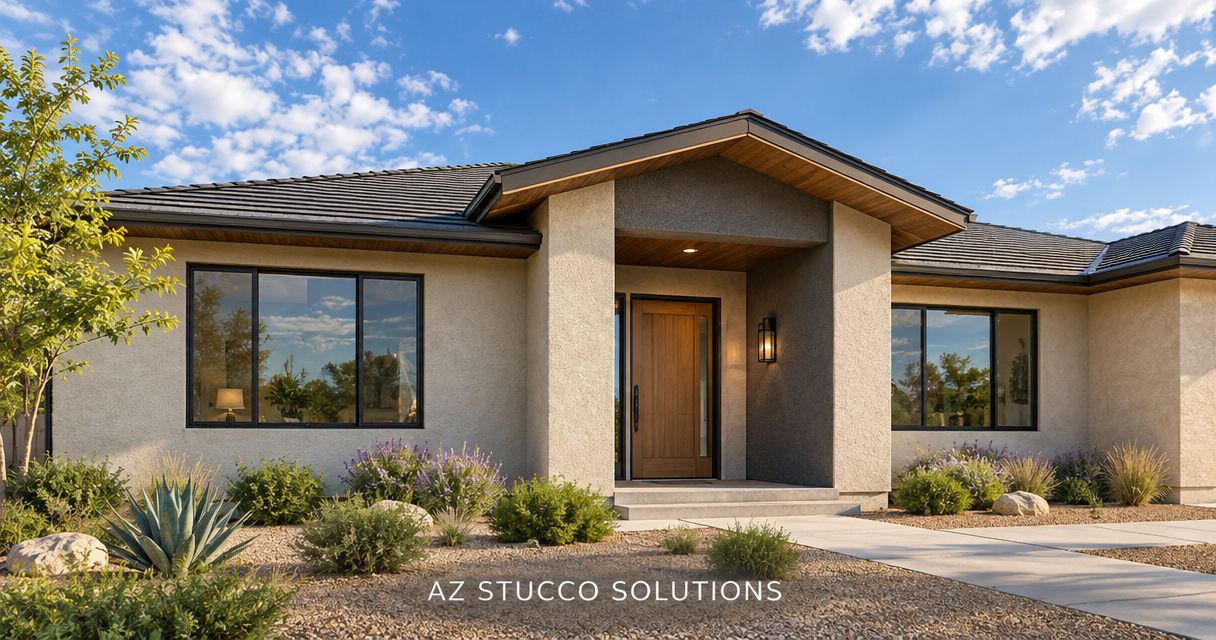
Best overall: fine sand. Best for a traditional ranch: light lace. Best for a modern update: smooth stucco. This 2026 guide compares stucco finishes for ranch style homes, including rustic dash and restrained skip trowel, so you can choose a texture that suits your roofline, masonry, and project scope.
- Fine sand tops stucco finishes for ranch style homes when you want subtle texture without a heavily patterned exterior.
- Light lace suits traditional ranch exteriors; smooth stucco suits deliberate modern updates.
- AZ Stucco Solutions LLC serves Phoenix homeowners planning stucco installation, re-stucco, and exterior restoration.
- Choose the finish after assessing the wall; texture does not correct underlying damage.
Why this matters
A ranch home usually presents a long, low exterior. Texture becomes part of that broad surface, not just a detail around the entry. A strongly patterned finish draws attention to the wall; a restrained finish lets brick, windows, and landscaping carry more of the composition.
AZ Stucco Solutions LLC is a fit for Phoenix property owners planning residential or commercial stucco installation and re-stucco. Owner Flavio Miguel Delgado brings over 30 years of construction experience, specializing in stucco. The AZ Stucco Solutions LLC team provides these services across Phoenix and surrounding communities.
For a 2026 exterior project, separate the appearance decision from the wall-condition decision. You can prefer a smooth finish and still need a broader assessment before anyone determines how to achieve it.
What makes the best stucco finishes for ranch style homes
Use these criteria before choosing a texture:
- Architectural fit: Match the texture to the home's horizontal lines, roof, porch, and existing masonry.
- Surface preparation: Determine whether the existing wall can receive the proposed work or needs repairs and other preparation.
- Visual consistency: Judge how the texture looks across broad walls, corners, and previous repair areas.
- Repair matching: Ask how a future localized repair would blend with the selected texture and color.
- Finish compatibility: Confirm that the finish material and preparation suit the existing or proposed wall assembly.
- Sample approval: Choose from a physical sample rather than a texture name or phone photograph alone.
Texture names do not define an exact result. Two finishes called light lace can have different pattern sizes, relief, and coverage. Your approved sample should settle those differences before the main application begins.
Ranch-home stucco finishes at a glance
| Finish | Best for | Standout characteristic | Key limitation |
|---|---|---|---|
| Fine sand | A balanced, understated exterior | Small, relatively even texture | Does not disguise uneven wall planes |
| Light lace | A traditional ranch exterior | Raised pattern with visible relief | Heavy application can dominate broad walls |
| Smooth stucco | A coordinated modern update | Minimal visible texture | Unevenness and repairs demand close attention |
| Dash | A deliberately rustic exterior | Pronounced granular texture | Difficult to change visually with paint alone |
| Skip trowel | Restrained decorative accents | Broken, hand-applied pattern | Inconsistent application is conspicuous |
These are appearance-led recommendations, not durability rankings. Texture alone does not establish crack resistance, moisture performance, or the condition of the wall beneath it.
1. Fine sand: best ranch-home finish for an understated exterior
Fine sand creates a small, relatively even texture rather than a pronounced decorative pattern. It is the strongest default when you want the stucco to support the home's architecture instead of becoming its main feature.
On a Phoenix ranch with brick accents or a long porch, fine sand gives those existing elements room to stand out. Keep the sample beside the materials you intend to retain.
Fine sand pros:
- Works as a quiet background for brick, stone, and trim.
- Adds texture without deep decorative relief.
- Fits both restrained traditional and transitional updates.
Fine sand cons:
- Does not make an uneven wall plane flat.
- Local repairs still require texture and color matching.
Best for: Homeowners re-stuccoing a ranch who want a cohesive exterior without a strong stylistic change.
Ask for a sample showing the actual grain and application. The word fine is not enough to communicate your expectations. Verdict: Buy—choose fine sand as the default, subject to wall assessment and sample approval.
2. Light lace: best ranch-home finish for traditional character
Light lace uses a raised, broken pattern that creates more visible relief than fine sand. It suits homeowners who want to retain a traditional stucco appearance rather than give the house a sharply modern face.
The important choice is pattern restraint. Look at the spacing and depth, not just the color, because a small sample can understate how much texture a full elevation will show.
Light lace pros:
- Provides a recognizable traditional stucco appearance.
- Adds visual depth across plain wall areas.
- Offers a way to retain an existing textured design direction.
Light lace cons:
- A heavy pattern can overwhelm a low, broad facade.
- Repairs require matching the pattern as well as the color.
Best for: Ranch homes with an established traditional exterior and owners who want continuity rather than reinvention.
Compare the proposed lace sample directly with any walls that will remain untouched. A close color match does not make different texture patterns disappear. Verdict: Buy—choose light lace when traditional character is the priority.
3. Smooth stucco: best ranch-home finish for a modern update
Smooth stucco minimizes visible texture and emphasizes the shape of the building. It makes the most sense when the windows, entry, trim, and other exterior choices support the same restrained direction.
Do not approve smooth stucco as a texture-only substitution. Ask what preparation is needed to achieve the proposed appearance across existing walls, especially where old patches or different surfaces meet.
Smooth stucco pros:
- Supports a clean, modern exterior composition.
- Keeps decorative texture from competing with architectural details.
- Makes broad color areas visually prominent.
Smooth stucco cons:
- Surface irregularities and repair transitions deserve particular attention.
- Strong side lighting can reveal imperfections.
- Achieving the intended result depends heavily on preparation and application.
Best for: A coordinated ranch renovation, not an isolated finish change disconnected from the rest of the exterior.
For a 2026 modernization, approve the texture with your retained brick, roof, and window finishes in view. Verdict: Hold—choose smooth stucco after confirming the preparation scope and approving a representative sample.
4. Dash: best ranch-home finish for rustic texture
Dash creates a pronounced granular surface through a thrown or sprayed application. It is an intentional choice for homeowners who want visible texture rather than a nearly flat-looking wall.
Before selecting dash, consider the whole facade. Deeply textured stucco, strongly patterned stone, and decorative trim can compete when all receive equal visual emphasis.
Dash pros:
- Establishes a clearly textured, rustic appearance.
- Gives otherwise plain walls visible surface character.
- Suits projects intended to retain an existing dash finish.
Dash cons:
- Paint changes color but does not remove the texture.
- Matching an existing dash repair takes attention to aggregate and application.
Best for: Ranch homes where rustic texture is a deliberate part of the exterior design.
Review the sample from the street as well as close up. Verdict: Buy—choose dash for a rustic direction; skip it if your goal is a visually quiet modernization.
5. Skip trowel: best ranch-home finish for limited accents
Skip trowel creates an irregular pattern of textured areas and smoother spaces. The appearance depends on the applicator's technique, making an agreed sample especially important.
For a ranch exterior, use restraint. A porch wall or recessed entry can carry the pattern without making every elevation compete for attention.
Skip trowel pros:
- Adds a visibly hand-applied character.
- Creates contrast between textured and smoother areas.
- Gives selected architectural features a distinct treatment.
Skip trowel cons:
- Changes in application style can be conspicuous.
- A busy pattern can distract from the home's horizontal lines.
Best for: Homeowners seeking a limited decorative treatment rather than a uniform whole-house finish.
Specify where the pattern begins and ends. Verdict: Hold—approve skip trowel as an accent before committing it to every exterior wall.
How the finishes rank
Fine sand ranks first for its restrained appearance and broad design fit. Light lace, smooth stucco, dash, and skip trowel each serve a more specific visual goal.
This 2026 ranking prioritizes architectural fit, preparation, visual consistency, repair matching, and sample approval. It does not claim one texture lasts longer than another or substitutes for a properly prepared wall.
Set the wall scope before selecting the final texture
Existing condition comes first. A localized defect can justify a localized repair when the surrounding assembly is sound. Widespread deterioration, recurring cracks, loose areas, or evidence of moisture deserve a broader assessment; none automatically proves that every wall needs re-stuccoing.
Use this sequence for a full re-stucco or installation discussion:
- Wall assessment: Identify existing materials, visible damage, and areas needing investigation.
- Scope agreement: Define repairs, removal, preparation, and the surfaces included.
- Sample approval: Confirm texture, color, and the intended visual standard.
- Finish application: Follow the selected system's preparation and application requirements.

Painting and re-stuccoing are different scopes, but both require attention to existing defects. Addressing the cause and repairing stucco cracks before painting keeps a color change from standing in for actual repair. Ask which defects are being corrected and which conditions need further investigation.
Approve samples where you will actually see the finish
For your 2026 project, request 2 sample panels of the leading textures as a practical comparison. This is a suggested decision method, not an installation requirement. Use the same proposed color so you can judge the texture without a color difference distracting you.
View the samples from 3 positions: close to the wall, at the entry approach, and from the street. Check them at 2 times of day, including when light falls across the surface. Shadows reveal texture differently from flat, front-facing light.
Keep the approved sample available during the work. A photograph records the decision, but it does not replace the physical reference for relief and texture.
What your stucco estimate should cover
A useful estimate describes how the wall will reach the agreed result, not simply the name of the finish. For a Phoenix ranch re-stucco, ask for these items in writing:
- Elevations and surfaces included, with exclusions identified.
- Existing-condition repairs and preparation included in the scope.
- Finish material, texture, color, and sample-approval process.
- Treatment around windows, doors, trim, and adjoining materials.
- Protection of landscaping, paving, and retained exterior features.
- Cleanup responsibilities and handling of newly discovered conditions.
For new installation, ask how the stucco work coordinates with the wall assembly and adjacent construction. For an occupied property, discuss access and daily disruption before work begins.
AZ Stucco Solutions LLC provides free residential stucco estimates. Use the estimate request form or call (480) 971-9500 to discuss your property and intended scope. Commercial property owners should ask about the assessment process for their specific project.
Which finish should you choose?
Choose fine sand if you want a restrained starting point for a ranch exterior. Choose light lace for traditional character, smooth stucco for a coordinated modern renovation, dash for rustic texture, and skip trowel for selected accents.
The best 2026 decision is an approved sample paired with a clear preparation scope. Do not let a finish name stand in for either one.
FAQ
What’s the best stucco finish for a ranch style home?
Fine sand is the default recommendation for a restrained ranch exterior. Its small, relatively even texture lets rooflines, brick accents, and windows remain prominent.
Is smooth stucco better than textured stucco for a ranch?
Smooth stucco is better for a deliberate modern appearance, not automatically better for every ranch. Fine sand or light lace fits a different design goal, and preparation matters for every option.
Can I change a heavy stucco texture to a smoother finish?
A texture change requires assessment of the existing surface and a defined preparation scope. Do not assume a new finish can simply be applied over every painted, damaged, or heavily textured wall.
Does every stucco crack mean my house needs re-stuccoing?
No, every stucco crack does not require whole-house re-stuccoing. Localized damage can warrant localized repair, while recurring cracks or other signs of deterioration call for broader assessment.
Should I choose stucco color or texture first?
Choose color and texture together on a physical sample. The texture creates shadows that affect how the color looks, particularly when sunlight falls across the wall.
What should I ask before accepting a re-stucco estimate?
Ask exactly which repairs, preparation, surfaces, and finish materials the estimate includes. Confirm sample approval, exclusions, protection of surrounding areas, and the process for unexpected conditions.
Who offers residential stucco estimates in Phoenix?
AZ Stucco Solutions LLC provides free residential stucco estimates in Phoenix and surrounding service areas. Call (480) 971-9500 to discuss installation, re-stucco, repairs, or exterior restoration.
One last thing
Decide the stopping points before approving the texture. If your project covers only the front elevation, ask how the new finish will meet the side walls at corners and returns. A sample can look right while an unresolved transition makes the overall project look unfinished.
Leave a Reply