
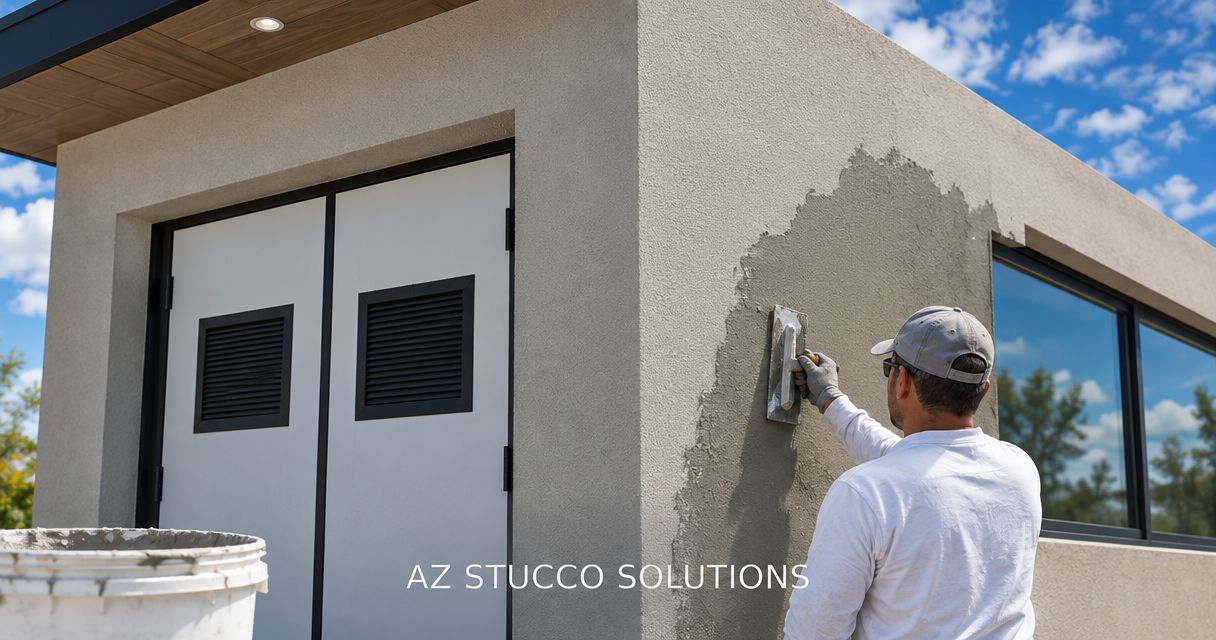
Best overall for sound, compatible stucco: a full-wall elastomeric coating; best for isolated damage: localized repair followed by a compatible finish; best for widespread surface failure: a re-stucco assessment. This 2026 guide compares elastomeric stucco coatings with the alternatives so you can choose the right scope for your Phoenix property—not just another layer of paint.
- Elastomeric stucco coatings suit sound, compatible walls; they do not replace damaged stucco or correct water-entry details.
- Choose localized stucco repair for isolated defects, not automatic full-wall restoration.
- Compare acrylic masonry paint when your priority is color renewal rather than a flexible coating.
- AZ Stucco Solutions LLC is best for Phoenix owners seeking residential or commercial stucco installation, repair, or restoration.
Why this matters
A coating decision is also a wall-condition decision. Covering loose material, unresolved water entry, or recurring movement does not correct the underlying problem, even when the finished surface looks uniform.
For Phoenix homeowners and small commercial property owners, the useful comparison starts with preparation, existing finishes, and the condition beneath them. Choose the repair scope before choosing the coating.
AZ Stucco Solutions LLC provides residential and commercial stucco installation, repair, and restoration. Owner Flavio Miguel Delgado brings over 30 years of construction experience specializing in stucco; that experience belongs to the owner, not the age of the company.
What makes the best elastomeric stucco coatings?
Use these criteria to compare a proposed coating system in 2026. A familiar product name is not a substitute for answers about your particular wall.
- Existing-surface compatibility: The proposed coating must suit the stucco, existing paint, and any remaining finish beneath it. Ask how compatibility will be checked.
- Sound preparation: The scope should identify cleaning, removal of loose material, patching, and any required primer. A finish depends on what supports it.
- Crack treatment: The contractor should distinguish isolated surface defects from recurring cracks or damaged wall areas. Coating flexibility does not eliminate movement.
- Moisture considerations: Ask how the proposed coating affects drying and whether water-entry details need attention before application.
- Application requirements: The estimate should identify the product and explain compliance with its current technical instructions, including coverage, film thickness, and weather restrictions.
- Appearance: Review a sample for texture, sheen, and color. A coating changes the finished appearance but does not necessarily hide existing texture differences.
Do not rank products by a generic promise to be waterproof. Ask what the coating is intended to do, what the wall needs first, and which conditions fall outside the proposed work.
Stucco coating options at a glance
These are ranked project approaches, not a claim that every property needs elastomeric paint. The best choice changes with the condition of your exterior.
| Rank and approach | Best for | Standout benefit | Key limitation |
|---|---|---|---|
| 1. Elastomeric coating | Sound, compatible stucco needing a flexible exterior coating | Forms a flexible surface film | Does not replace failed stucco or correct active water entry |
| 2. Localized repair | Isolated damaged areas with sound surrounding stucco | Keeps the repair focused on the defect | Texture and color blending require care |
| 3. Acrylic masonry paint | Sound walls needing color renewal without a specified elastomeric system | Provides an exterior color finish | Not interchangeable with an elastomeric coating specification |
| 4. Re-stucco assessment | Widespread deterioration or a planned exterior restoration | Evaluates the wall beyond another coating | Involves a broader scope than repainting |
The order reflects the coating question first, then the alternatives that prevent an unsuitable coating purchase. It is not a ranking of brands, durability claims, or contractor preferences.

1. Elastomeric coating: best for sound, compatible stucco
An elastomeric wall coating forms a flexible film over a suitable exterior surface. It belongs on a sound, properly prepared wall where its properties match the project requirements—not over material that is separating from the wall.
For a 2026 coating proposal, ask for the exact product and current technical data sheet. The word elastomeric alone does not establish suitability, required preparation, or the correct application thickness.
Elastomeric coating pros:
- Provides a flexible exterior film when properly specified and applied.
- Gives a continuous finish across a prepared wall area.
- Offers a coating approach for compatible stucco without automatically replacing the stucco beneath it.
Elastomeric coating cons:
- Does not repair detached stucco or correct structural movement.
- Requires attention to existing coatings, adhesion, and moisture conditions.
- Can alter the appearance of fine surface details or texture.
Best for: Owners whose existing stucco is sound and whose contractor can explain why an elastomeric system fits the wall.
Ask what happens at repaired cracks, transitions, windows, and doors before approving the work. If the answer focuses only on the finish color, the specification is incomplete.
Verdict: Buy only after the wall condition and coating compatibility are established.
2. Localized repair: best for isolated stucco damage
Localized repair addresses a defined defect rather than replacing or coating every exterior wall. The repair should address the damaged material and its cause, followed by an appropriate finish treatment.
An isolated crack does not automatically justify re-stuccoing. The important questions are whether the surrounding material remains sound and whether the defect is recurring or associated with other signs of damage.
Localized repair pros:
- Keeps work focused on the affected area.
- Preserves sound stucco outside the repair.
- Allows the contractor to address the defect before choosing a finish.
Localized repair cons:
- A patch can remain visible because of texture or color differences.
- Repairing the visible line alone does not resolve an underlying cause.
- Separate patches do not provide a uniform whole-wall appearance.
Best for: Owners with isolated defects and otherwise sound exterior stucco.
Ask whether the finish work stops at the patch or extends to a natural wall boundary. Those are different scopes, and your estimate should make the distinction clear.
Verdict: Buy a localized repair when the defect is isolated; hold a whole-building coating decision until the surrounding walls are assessed.
3. Acrylic masonry paint: best for straightforward color renewal
A suitable exterior acrylic masonry paint is an alternative when your main objective is refreshing the appearance of sound stucco. It is not automatically equivalent to an elastomeric coating, and the product label must support the intended surface and application.
If your Phoenix exterior needs a color change rather than a specialized flexible coating, ask the contractor to explain both approaches. The recommendation should identify a wall requirement, not simply describe one material as better.
Acrylic masonry paint pros:
- Provides a color finish on compatible, prepared masonry surfaces.
- Lets you consider repainting separately from broader stucco restoration.
- Keeps the discussion focused on the actual appearance goal.
Acrylic masonry paint cons:
- Does not repair cracks, loose stucco, or water-entry details.
- Still requires preparation and compatibility checks.
- Does not satisfy a project specification that specifically requires an elastomeric system.
Best for: Owners with sound stucco who want color renewal and have no established requirement for an elastomeric coating.
Review the proposed sheen as well as color. A finish sample is more useful than a color name alone, especially where existing repairs have different textures.
Verdict: Buy for compatible color-renewal work; skip it as a substitute for necessary stucco repairs.
4. Re-stucco assessment: best for widespread deterioration
A re-stucco assessment examines whether the exterior needs broader restoration rather than another surface coating. Depending on the findings, the scope can involve removal, repair, preparation, and a new finish; those details must be written into the proposal.
Widespread loose material, repeated failures, or a major exterior redesign warrants a broader discussion. That does not mean every wall needs replacement, and the assessment should explain which areas remain serviceable.
Re-stucco assessment pros:
- Addresses the condition of the stucco rather than treating paint as the whole problem.
- Creates an opportunity to plan a consistent texture and finish.
- Helps define a larger residential or commercial restoration scope.
Re-stucco assessment cons:
- Requires more coordination than a finish-only project.
- Needs clear boundaries between retained material and removal areas.
- Is not justified solely by an isolated cosmetic crack.
Best for: Owners planning substantial exterior restoration or dealing with deterioration across multiple wall areas.
AZ Stucco Solutions LLC provides re-stucco and exterior restoration services alongside new installation. For larger projects, request a proposal that separates preparation, repairs, and finish work so you can understand the scope.
Verdict: Hold the coating purchase when widespread deterioration calls for a re-stucco assessment.
What your 2026 stucco estimate should cover
A useful estimate explains the work you are buying. It should let you distinguish a finish-only proposal from one that includes substantial surface correction.
Request these details in writing:
- Wall areas: Identify included elevations, detached walls, columns, and other surfaces. State exclusions clearly.
- Preparation: Describe cleaning, removal of loose material, repairs, and primer where required.
- Crack handling: Explain which defects receive treatment and how recurring or uncertain conditions will be addressed.
- Coating specification: Name the proposed product and reference its application requirements rather than relying on a generic coating label.
- Finish selection: Record the agreed texture, color, sheen, and sample-approval process.
- Property protection: Describe protection for windows, paving, landscaping, and adjacent surfaces, plus cleanup responsibilities.
- Scope changes: Explain how newly exposed damage will be documented and authorized before additional work proceeds.
Use 3 scope questions when comparing proposals: What stays? What gets repaired or removed? What finish goes back on? These questions expose differences that a single project total cannot explain.
For a commercial property, also discuss access around entrances and occupied spaces. Get the coordination requirements into the scope rather than assuming they are included.
AZ Stucco Solutions LLC provides free residential stucco estimates. For commercial work, discuss the assessment and estimate arrangements directly; do not assume the residential offer applies.
Request a stucco estimate
Discuss wall condition, preparation, and the right scope for your Phoenix-area property.
How these approaches are ranked
This 2026 guide ranks approaches by wall condition, compatibility, preparation, and the owner's intended result. It does not claim laboratory testing or compare named coating products without their specifications.
Elastomeric coating leads because it directly answers the coating question. Localized repair, acrylic masonry paint, and re-stucco assessment follow as distinct alternatives—not interchangeable finishes.
For new construction, start with the specified stucco assembly and finish requirements. Do not choose an elastomeric coating in isolation from the rest of the exterior wall design.
Which stucco coating approach should you choose?
Choose an elastomeric coating only when the existing wall is sound and the proposed system is compatible. Choose localized repair for isolated defects, acrylic masonry paint for suitable color-renewal work, and a re-stucco assessment for broader deterioration.
If you are undecided, start with the condition assessment rather than a product shortlist. AZ Stucco Solutions LLC is best for Phoenix owners seeking residential or commercial stucco installation, repair, or restoration.
FAQ
What’s the best elastomeric coating for stucco in Phoenix?
The best elastomeric coating is one specified for your existing stucco and coating condition. Choose the product after checking surface soundness, compatibility, preparation requirements, and moisture concerns—not from the category name alone.
Will elastomeric stucco coatings fix cracks?
Elastomeric stucco coatings do not replace crack assessment and repair. A flexible film can accommodate limited movement within its product specifications, but recurring cracks or damaged stucco require attention before coating.
Is elastomeric coating better than acrylic masonry paint?
Elastomeric coating is not automatically better than acrylic masonry paint. Choose according to the wall condition and required coating properties; suitable acrylic masonry paint remains an option for straightforward color renewal.
Does every stucco crack mean I need re-stuccoing?
No, an isolated stucco crack does not automatically require re-stuccoing. Localized repair can be sufficient when the surrounding material is sound and the cause of the defect is addressed.
Can elastomeric coating go over existing painted stucco?
Elastomeric coating can go over some existing painted stucco when the proposed system is compatible and the underlying finish is sound. The contractor should check the existing coating and follow the selected manufacturer’s preparation instructions.
What should a stucco coating estimate include?
A stucco coating estimate should identify wall areas, preparation, repairs, the proposed coating, and the agreed finish. It should also explain exclusions, property protection, cleanup, and how additional damage will be handled.
Does AZ Stucco Solutions LLC offer free estimates?
AZ Stucco Solutions LLC offers free residential stucco estimates. Call (480) 971-9500 to discuss your property; commercial estimate arrangements should be confirmed directly.
One last thing
Before approving your 2026 exterior finish, request 2 sample areas: one on representative existing texture and one over a prepared repair, if the project includes repairs. Compare them in the light where you will actually see the wall.
A coating can unify color while leaving texture differences visible. Approve the surface appearance—not just the color selection—before full application.
Leave a Reply