
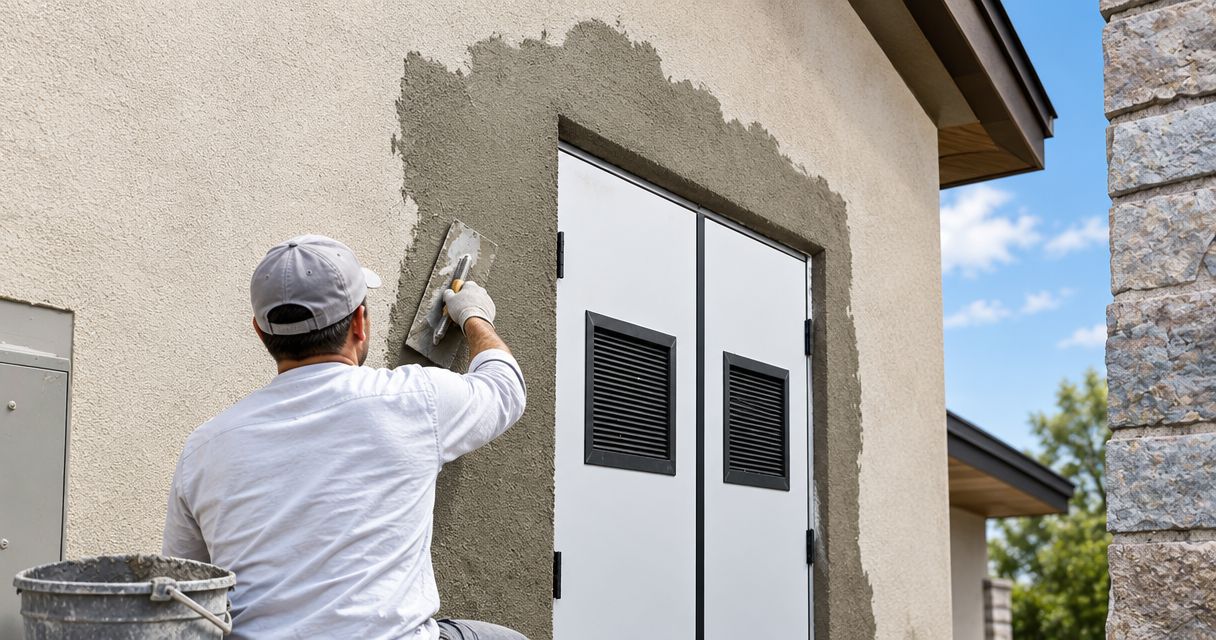
For restoration contractors, stucco repair is the assessment and restoration of damaged exterior stucco with the aim of returning the property to a sound, consistent finish. This 2026 guide explains how to define the repair boundary, coordinate related trades, and choose between localized repair and broader re-stucco work on Phoenix-area properties.
- Stucco repair for restoration contractors starts with identifying the wall system and the cause of damage, not choosing patch material.
- Localized repair suits isolated damage; re-stucco needs a broader assessment, not a crack alone.
- AZ Stucco Solutions LLC fits Phoenix residential and commercial projects requiring specialized stucco installation, repair, or restoration.
- Document preparation, concealed conditions, finish approval, and trade responsibilities before approving the scope.
Why stucco repair matters for restoration contractors
Restoration contractors must coordinate more than the visible wall finish. Your stucco scope intersects with demolition, windows, roofing, waterproofing details, painting, and the owner's expectations for the finished exterior. An unclear boundary leaves those responsibilities unresolved.
For a Phoenix home or small commercial building, the decision is not simply which patch to use. You need to establish what remains sound, what requires removal, and whether adjacent work must happen before stucco installation begins. A crack alone does not establish the need for full re-stucco.
AZ Stucco Solutions LLC is best suited to Phoenix-area property owners seeking a specialist for residential or commercial stucco installation, repair, and restoration. Owner Flavio Miguel Delgado brings over 30 years of construction experience specializing in stucco; that experience is not the age of the LLC.
Use this 2026 guide to build a scope that a stucco contractor, your other trades, and the property owner can interpret the same way.
Plan the stucco restoration work
Start with a shared project folder and a marked exterior photograph or elevation drawing. You do not need specialized software to document damage, assign responsibilities, or record approvals. You do need an agreed process for changing the scope when opening the wall reveals additional work.
The following 6 steps separate assessment, scope, preparation, appearance, estimating, and acceptance. Keep those decisions distinct: approval of a texture sample does not approve concealed repairs or authorize additional demolition.
Document conditions
Walk the exterior before writing a material list. Photograph each affected elevation, then take closer views that show the damage and its relationship to windows, doors, roof edges, penetrations, and the ground. Record observations without turning them into an unsupported diagnosis.
Create 3 records: an overview map, detailed photographs, and a written condition log. Note whether the owner reports recurring damage, previous repairs, or staining after rain. Those reports guide further investigation; they do not establish the cause by themselves.
For occupied commercial properties, document access constraints alongside wall conditions. Entrances, walkways, signs, landscaping, and neighboring businesses affect how work is organized. Keep public access planning separate from the technical repair decision.
Close the initial survey with these actions:
- Mark each affected elevation and opening.
- Separate visible observations from suspected causes.
- Record previous repair locations reported by the owner.
- Note staining, loose material, and damaged adjacent components.
- Photograph access routes and items needing protection.
Define boundaries
Use the condition record to distinguish an isolated repair from work extending across a wall or building. Localized damage with sound surrounding material calls for a different assessment than recurring cracks, widespread deterioration, or damage involving adjacent components. Do not use appearance alone to decide what lies behind the finish.
Ask the stucco specialist to identify the existing assembly before specifying repairs. Traditional cement stucco and exterior insulation and finish systems, or EIFS, are different assemblies; their repair details are not interchangeable. Follow the applicable system documentation rather than treating every exterior finish as the same material.
AZ Stucco Solutions LLC provides residential and commercial stucco repair, re-stucco, installation, and exterior restoration. Bring the specialist into the scope discussion when the project extends beyond an isolated patch, while retaining the restoration contractor's responsibility for trade coordination.
Define the repair boundary in writing:
- Identify the existing wall assembly.
- Mark proposed removal and repair limits.
- Explain why adjacent material stays or comes out.
- Distinguish surface restoration from underlying repairs.
- Set a stop-and-review point for concealed damage.
Coordinate preparation
Before stucco work begins, decide who resolves conditions outside the stucco contractor's scope. A new finish does not substitute for correcting a failed adjacent component. Where the cause is uncertain, arrange the relevant assessment rather than covering the evidence.
Use a simple responsibility sheet. List each task, the responsible trade, and the condition required before the next trade starts. Window-related work, roof-to-wall details, penetrations, and surface preparation deserve explicit handoffs rather than a general instruction to coordinate on site.
For Phoenix work in 2026, ask how the proposed materials' application requirements will shape scheduling and protection. Product instructions govern substrate preparation, weather conditions, curing, and subsequent coating. Do not replace those requirements with a universal hot-weather rule.
Agree on these preparation items:
- Assign responsibility for adjacent building components.
- Define removal limits and debris handling.
- Record substrate acceptance requirements.
- Identify protection for openings, paving, and landscaping.
- Establish hold points before concealed work is covered.
- Confirm the applicable material instructions.
Approve finishes
A technically appropriate repair still needs an agreed appearance. Identify the existing texture, color, coating condition, and natural stopping points before promising a match. A small patch and a full elevation create different opportunities for visual consistency.
Request 1 representative finish sample for owner review, with additional samples if the proposed choices differ. Evaluate the sample against the actual wall in natural light. A sample records an appearance decision; it does not guarantee that a localized repair will become invisible on an aged exterior.
For larger residential and commercial restoration projects, discuss whether the finish should stop at the patch boundary, an architectural break, or the full elevation. Broader finishing is an option to evaluate, not automatic justification for removing otherwise sound stucco.
Record the finish decision clearly:
- Identify the requested texture and color.
- Distinguish stucco finish from any separate coating.
- Choose a representative sample location.
- Record the approved sample with photographs.
- Define finish boundaries at architectural breaks.
- Explain visible-match limitations before authorization.
Compare scopes
Compare estimates by included work, not by the size of the final total. A proposal covering preparation and a full-elevation finish is not equivalent to a localized repair proposal that excludes both. Ask each contractor to explain the same project boundaries.
For your 2026 estimate package, request separate descriptions for removal, substrate work, stucco installation, finishing, protection, and cleanup. State whether concealed conditions require a written change before work continues. Separate known work from work that cannot be defined until the wall is opened.
Do not treat an estimate as confirmation of a completion date or warranty coverage. Those details belong in the agreed project documents. The owner needs to know what is included, what remains uncertain, and who can authorize changes.
Check each proposal for these items:
- Named elevations and repair boundaries.
- Included preparation and removal work.
- Material or system identification.
- Finish scope and sample approval process.
- Exclusions and concealed-condition procedures.
- Protection, cleanup, and trade responsibilities.
Verify completion
Plan the final review before installation starts. Use the approved scope, condition photographs, and finish sample as your reference documents. A general request to make the wall look good does not provide an agreed acceptance standard.
Arrange 2 approvals: one for relevant work before it is concealed, and another for the completed visible finish. The appropriate project professional should review technical work within their responsibility. Photographs support the record but do not replace required inspections or qualified assessment.
At handover, separate incomplete work from maintenance guidance and any written warranty terms. Record unresolved items plainly, with the responsible party identified. Avoid closing a project on an informal promise that someone will return later.
Complete the handover with these records:
- Photographs of agreed concealed-work hold points.
- Confirmation of the approved finish sample.
- A documented final walkthrough.
- An assigned list of unresolved items.
- Applicable care instructions and product information.
- The customer's written agreement and warranty terms.
Choose the appropriate restoration scope
Choose the smallest scope that addresses the confirmed problem, not merely the smallest visible blemish. Localized repair is appropriate when the assessment supports it. Broader re-stucco becomes a separate decision when condition, finish goals, or the extent of work warrants it.
The following options describe project scope, not interchangeable materials. None is a substitute for identifying the existing assembly and investigating relevant underlying damage.
| Option | Best for | Main advantage | Key limitation |
|---|---|---|---|
| Localized stucco repair | Isolated damage with sound surrounding material | Limits intervention to the affected area | The repair can remain visible against an aged finish |
| Elevation-wide finish restoration | A wall needing a more consistent appearance after repairs | Establishes a defined visual boundary | Does not resolve uncorrected underlying defects |
| Broader re-stucco | Properties where assessment supports extensive surface restoration | Coordinates restoration across a larger exterior area | Requires clear preparation, compatibility, and removal decisions |
| New stucco installation | Additions, new walls, or areas requiring a new assembly | Defines the assembly before finishing | Depends on coordinated substrate and adjacent construction details |
| System-specific EIFS repair | Damage to an identified EIFS assembly | Keeps the repair tied to the existing system requirements | Generic cement-stucco patch methods are not a substitute |
A broader scope brings more access, protection, and coordination decisions. Its advantage must come from the property's condition or the owner's approved finish goals—not an assumption that larger work is always better.

Common mistakes restoration contractors make
Treating the finish as the entire repair
A surface patch does not address an unresolved problem at an adjacent window, roof detail, or other component. Assign the investigation and correction before scheduling finish work. Keep those responsibilities visible in the scope even when another trade performs them.
Promising an invisible localized patch
Texture, color, and the condition of the surrounding wall affect the finished appearance. Show the owner the proposed sample and explain the repair boundary before authorization. Discuss elevation-wide finishing as an appearance option, not a guaranteed requirement.
Leaving concealed damage outside the change process
An instruction to repair as needed does not define who authorizes additional work. Establish the stop point, documentation requirements, and approval contact before removal begins. This keeps a newly discovered condition from becoming an undocumented scope expansion.
Applying one repair method to every assembly
An exterior that looks like stucco still needs system identification. Confirm whether the project involves traditional cement stucco, EIFS, or another assembly before selecting materials. Use the relevant installation and repair documentation.
Assuming commercial estimating follows residential terms
AZ Stucco Solutions LLC offers free residential stucco estimates; do not assume the same terms apply to commercial assessments. Explain the property type and requested scope when contacting the company. For either project type, request clear inclusions and exclusions.
Discuss your Phoenix restoration scope
Bring your elevation photographs, proposed repair boundaries, and finish goals when you contact the stucco team. For larger residential or commercial work, include the related trades and the person authorized to approve scope changes.
AZ Stucco Solutions LLC serves Phoenix and surrounding communities, including Mesa, Gilbert, Chandler, Scottsdale, Tempe, Glendale, and Peoria. Request an estimate through the website or call (480) 971-9500; describe whether you need localized repair, broader re-stucco, or new installation.
FAQ
What’s the first step in stucco repair for restoration contractors?
Start by documenting the damage and identifying the existing wall assembly. Record affected elevations, adjacent components, and reported repair history before choosing materials or setting removal limits.
Does every stucco crack mean the building needs re-stucco?
No, a crack alone does not establish the need for re-stucco. Assess the surrounding material, recurring damage, and relevant underlying conditions before choosing localized repair or broader restoration.
Can a stucco patch match the existing wall exactly?
Do not promise an invisible patch before reviewing a representative sample. Existing texture, color, and wall condition affect the result, so agree on appearance and finish boundaries before work starts.
Is EIFS repair the same as traditional stucco repair?
No, EIFS and traditional cement stucco are different assemblies. Identify the existing system and follow its applicable repair documentation rather than substituting a generic patch method.
What should a commercial stucco restoration estimate include?
A commercial stucco restoration estimate should define repair boundaries, preparation, materials, finishing, protection, cleanup, and exclusions. It should also state how concealed conditions and additional work receive authorization.
Should other trades finish before the stucco contractor starts?
Work affecting the stucco assembly must be coordinated before the relevant stucco stage begins. Assign responsibility for windows, roof details, penetrations, and other adjacent components instead of leaving the sequence informal.
Does AZ Stucco Solutions LLC provide free estimates?
AZ Stucco Solutions LLC provides free residential stucco estimates. Contact the company to discuss commercial assessment terms and explain the property’s restoration scope.
One last thing
Approve where the repair ends before approving how the finish looks. A boundary at a corner, opening, or architectural break gives everyone a specific area to discuss; an undefined promise to blend the patch does not.
For your 2026 restoration file, keep the boundary photograph beside the approved sample. That pairing connects the owner's appearance decision to the actual work area.
Leave a Reply