
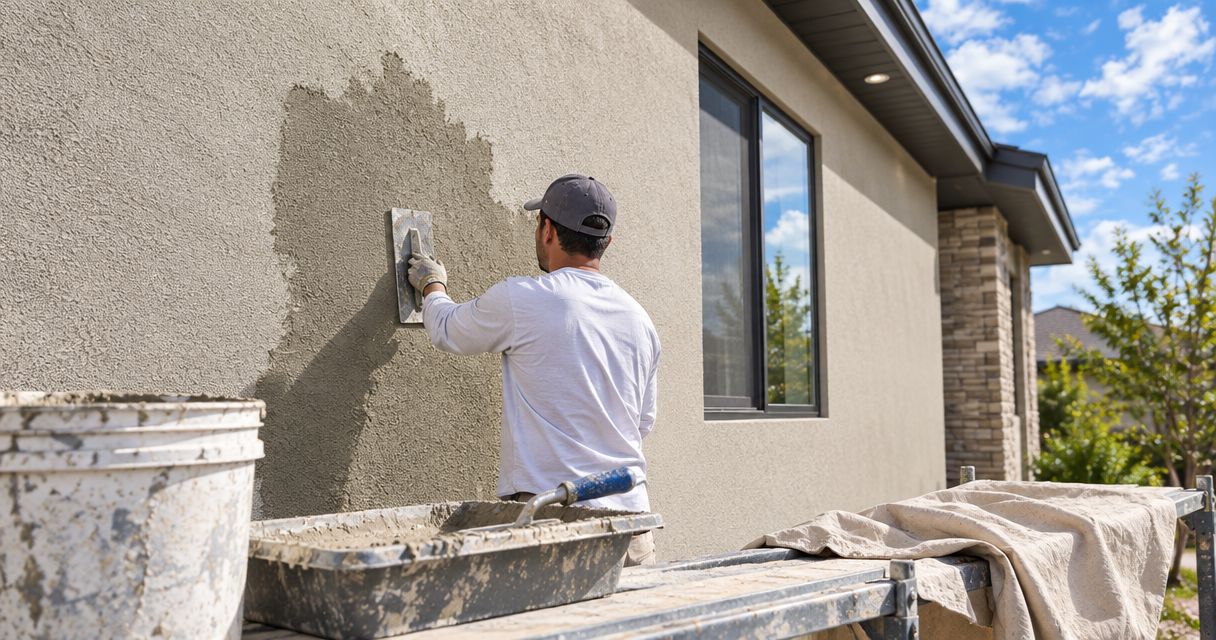
The cost to retexture stucco after repair depends on the area being refinished, the preparation required, and whether the work stops at the patch or covers a larger wall section. For a 2026 estimate, ask for texture work, underlying repairs, and painting to be separated so you can see exactly what the proposed amount includes.
- The cost to retexture stucco after repair depends on preparation, finish scope, access, and painting.
- Compare a localized texture blend with a full-wall finish before approving broader re-stucco work.
- AZ Stucco Solutions LLC provides residential and commercial stucco services for Phoenix-area property owners.
- A written stucco repair estimate should distinguish surface refinishing from repairs beneath the finish.
Why this matters
A repaired wall needs more than a closed opening: you also need a clear agreement about how the finished surface should look. Texture, color, and the boundary of the work are separate decisions, and a proposal should address each one.
AZ Stucco Solutions LLC handles residential and commercial stucco installation, repairs, re-stucco, and exterior restoration across the Phoenix area. Owner Flavio Miguel Delgado has over 30 years of construction experience, specializing in stucco. AZ Stucco Solutions LLC is best for Phoenix-area property owners seeking a stucco contractor for repair, re-stucco, or new installation.
How much does it cost to re-texture stucco after a repair?
The useful comparison is the amount for an agreed finish area—not an isolated patch price. Ask each contractor to identify where the underlying repair ends and where the texture application, color treatment, and cleanup end.
Compare these 3 scope options when reviewing a 2026 proposal. They address different needs, so treating them as interchangeable makes estimates harder to judge.
| Scope option | Best for | Main benefit | Main limitation |
|---|---|---|---|
| Localized texture blend | An isolated repair with sound surrounding stucco | Keeps work concentrated around the affected area | The transition between existing and new texture can remain noticeable |
| Full-wall finish | A sound wall where visual consistency across the elevation matters | Moves the finish boundary to defined wall edges | Includes surface work beyond the original repair |
| Broader re-stucco assessment | Widespread deterioration or multiple areas needing evaluation | Considers the condition and finish of the larger exterior | Requires a broader scope decision; a single crack does not justify it |
Ask for separate descriptions if a contractor proposes more than one option. A localized blend and a full-wall finish should not appear under the same vague line item labeled stucco repair.
What should the breakdown include?
The proposal should distinguish removal of damaged material, repairs beneath the surface, surface preparation, finish application, and any painting or coating. Access equipment, protection of nearby surfaces, debris removal, and cleanup also belong in the written scope.
You do not need a separate charge for every task. You do need to know whether each task is included, excluded, or dependent on conditions found after removal.
Localized texture blend: Keep sound surrounding stucco
A localized blend concentrates the finishing work around a repaired area. It is the first option to discuss when damage is isolated and the adjacent stucco is sound—not a shortcut around evaluating the cause of the damage.
Best for: an isolated repair where preserving the surrounding finish is the priority. The advantage is a contained work area; the trade-off is the possibility of a visible transition. Ask where the contractor expects to stop the texture and how that edge will be treated.
Review the proposed appearance before work starts. If the patch sits beside an entry or across a highly visible wall, your expectations for the blend deserve particular attention. Do not assume that matching paint color alone will make a different texture disappear.
Full-wall finish: Define the boundaries first
A full-wall finish extends the surface treatment beyond the patch to an agreed boundary, such as a corner or another architectural break. The underlying repair still needs its own description; covering a larger surface does not replace that repair.
Best for: a sound wall where consistency across the visible surface matters more than limiting work to the patch. The benefit is a clearly defined finish area. The limitation is additional preparation and application beyond the original damage.
For a 2026 finish selection, agree on the texture before approving the scope. Ask whether the proposal preserves the existing texture, modifies it, or prepares the wall for a different finish. Those are different instructions, even when the intended color stays the same.
Broader re-stucco assessment: Look beyond appearance
Repeated repairs, widespread loose material, or signs of moisture damage warrant evaluation beyond the visible patch. They do not, by themselves, establish that every wall needs replacement or refinishing.
Best for: properties with concerns across multiple wall areas or owners already planning broader exterior restoration. A larger assessment helps separate cosmetic goals from needed repairs. Its limitation is that the final scope depends on what the existing exterior can support.
Ask the contractor to explain which findings support localized work and which support a larger project. For Phoenix homeowners and small commercial property owners, that explanation should come before choosing a new texture or approving whole-building work.
Why the cost to retexture stucco after repair varies
The following factors explain why proposals for apparently similar patches can describe different amounts of work. Use them to compare scope rather than assuming the lowest total covers the same result.
- Finish area: A patch-only blend, a full-wall finish, and a broader exterior project have different application boundaries.
- Existing condition: Loose material, failed previous repairs, or damage beneath the finish changes what must happen before texturing.
- Texture choice: Matching an existing texture and changing to a different finish require different preparation decisions.
- Access and protection: Wall height, nearby roofing, landscaping, windows, and occupied entrances affect how the work is arranged.
- Color treatment: A proposal should say whether it includes texture alone, a colored finish, or painting after the repair.
- Related repairs: Moisture-entry details and damaged components need their own scope rather than being hidden inside a cosmetic allowance.
A small visible defect does not describe everything beneath it. Equally, a noticeable crack is not proof that you need full re-stuccoing. Choose the scope that addresses the observed condition, then decide how far the finish should extend.
Use these 5 estimate checks before approving work
For a 2026 estimate, ask the contractor to describe the wall in plain language and mark the proposed work boundaries. These checks help turn a general promise to match the stucco into a scope you can review.
- Repair boundary: Identify the damaged area and what material will be removed or retained. Ask how additional findings will be documented and approved.
- Surface preparation: Confirm what cleaning, removal, and preparation are included before the finish is applied. Ask how the proposed material suits the existing surface.
- Finish selection: Record the intended texture and the area receiving it. If a sample is proposed, agree on where and how you will review it.
- Color treatment: State whether painting or another color treatment is included. Identify the boundary of that work separately from the repair boundary.
- Written exclusions: Confirm protection, cleanup, access arrangements, and excluded repairs. Ask what requires a written change before additional work proceeds.

Keep a copy of the agreed texture description with the proposal. If you change the desired finish later, ask for an updated scope before application begins rather than relying on a conversation at the job site.
Separate texture matching from paint selection
Texture is the physical surface pattern; paint changes the coating and color. A proposal that addresses only one leaves an important appearance decision unresolved. Ask to review both, especially where a repaired wall meets an existing finish that will remain untouched.
Comparing paint brands for stucco comes after identifying the wall material, existing coating, and repair requirements; a brand name alone does not establish compatibility. Ask the contractor to identify the proposed coating and follow its manufacturer's preparation and application instructions.
For a 2026 exterior refresh, decide whether your priority is preserving the existing appearance or changing the wall's finish. A new color and a new texture are separate choices. Keeping those decisions separate makes it easier to understand which work is necessary for the repair and which work serves your preferred appearance.
Also clarify who handles painting if a different contractor will perform it. The stucco and painting scopes should identify the handoff, including who confirms that the repaired surface is ready for the proposed coating. Do not leave that responsibility between trades.
Can I retexture only the repaired spot?
Yes—a localized texture blend is an option when the surrounding stucco is sound and the repair cause has been addressed. Ask the contractor to explain the expected transition rather than promise an invisible patch.
If appearance across the whole wall is your priority, request a separate full-wall finish option. Compare the boundaries and preparation, not just the totals.
Does retexturing include fixing water damage?
Retexturing describes surface finishing; it does not automatically include correcting moisture entry or replacing damaged material beneath the surface. Those tasks need to be stated separately in the proposal.
If you see staining, soft material, or recurring damage, request an assessment before approving cosmetic work. A fresh surface is not evidence that the underlying problem has been corrected.
Should I re-stucco the whole house after a repair?
An isolated repair does not automatically justify whole-house re-stuccoing. A broader project deserves consideration when the assessment identifies wider problems or when you intentionally want an exterior-wide finish change.
Ask for the repair recommendation and the appearance recommendation separately. You can then decide whether to address one wall now or plan a larger exterior project with a clearly defined purpose.
Request a scope you can compare
AZ Stucco Solutions LLC provides free residential stucco estimates for Phoenix-area homeowners. For a larger residential or commercial project, describe the affected walls, known damage, and whether you want to preserve or change the existing finish.
Use the contact page or call (480) 971-9500 to request an estimate. Ask for the repair boundary, finish area, and painting responsibilities to be addressed together so you can make an informed decision.
FAQ
How do I compare the cost to retexture stucco after repair?
Compare estimates with the same repair boundary, finish area, texture, and painting scope. A patch-only proposal and a full-wall finish proposal describe different work, even if both are labeled stucco repair.
Can a stucco patch match the texture on my house?
Texture matching aims to blend the repaired area with the existing surface, but an invisible result should not be assumed. Ask how the contractor will handle the transition and whether a sample is appropriate.
Is painting included after a stucco repair?
Painting is included only when the written proposal says so. Confirm the coating, application area, and responsibility for preparing the repaired surface.
Does every stucco crack mean I need to re-stucco?
No, a crack alone does not establish that you need re-stuccoing. The recommendation should follow an assessment of its cause, the surrounding material, and the condition of the affected wall.
Should I change the texture while repairing stucco?
Change the texture if it supports your intended appearance and the contractor confirms an appropriate preparation plan. Ask for texture changes to be distinguished from work needed to correct the damage.
What should I ask before approving a commercial stucco estimate?
Ask which walls are included, how access and surface protection will be handled, and who coordinates related painting or repairs. For an occupied property, include entrance access and communication responsibilities in the scope.
Does AZ Stucco Solutions LLC offer free estimates?
AZ Stucco Solutions LLC provides free residential stucco estimates. Commercial property owners should contact the company to discuss their project and estimate arrangements.
One last thing
Ask the contractor to mark two boundaries: where the damage repair ends and where the new finish ends. Those boundaries do not have to be identical. Seeing both on a photograph or written wall description makes your 2026 estimate easier to understand than a single line promising a matching patch.
Leave a Reply