
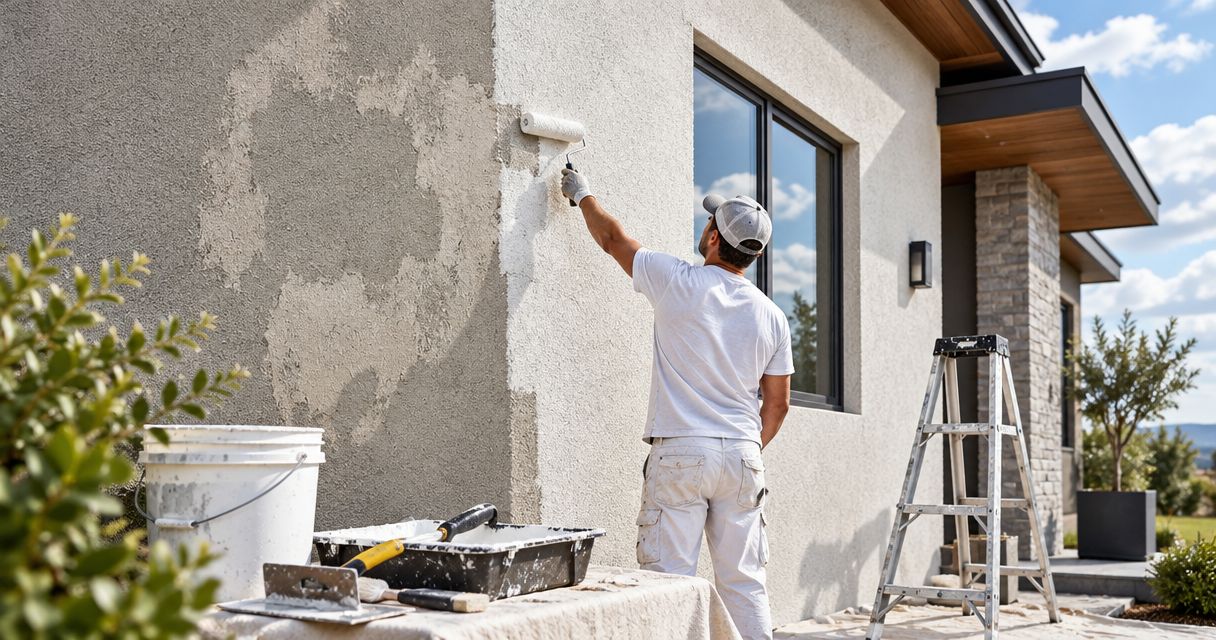
Stucco painting cost after repair depends on the wall area being repainted, the preparation required, and whether the work stops at the patch or covers the entire wall. For your 2026 project, request separate repair and painting scopes: a patch repair does not automatically include texture blending, primer, or repainting the surrounding surface.
- Compare stucco painting cost after repair by preparation, coating specification, and painted area—not patch size alone.
- Spot painting limits the work area but risks a visible difference in color, sheen, or texture.
- Whole-wall painting creates a consistent stopping point; sound stucco does not automatically need replacement.
- AZ Stucco Solutions LLC provides Phoenix-area stucco repair and re-stucco assessments; confirm painting responsibilities in your estimate.
How much does stucco painting cost after repair?
The useful comparison is the complete finishing scope, not the repair footprint alone. A small repaired area and a wall-wide repaint are different projects, even when both start with the same crack.
Ask your contractor to separate the following items in your 2026 estimate. The exterior painting schedule and stucco repair workflow also explains how to coordinate those stages rather than treating painting as an automatic final step.
| Estimate component | What the written scope should identify | What to clarify |
|---|---|---|
| Stucco repair | Damaged areas and the proposed repair method | Whether concealed damage changes the scope |
| Surface preparation | Cleaning, removal of loose material, and surface corrections | Whether preparation covers the patch or the whole painted area |
| Texture matching | The finish being reproduced and its boundaries | Whether a sample is included |
| Primer or conditioner | Product requirements for repaired and existing surfaces | Whether the specified coating requires either treatment |
| Finish coating | Coating type, application requirements, and color | Whether the existing finish is compatible |
| Painted area | Patch, complete wall, or broader exterior | Where work stops at corners, trim, or other breaks |
| Protection and cleanup | Windows, paving, landscaping, and adjacent surfaces | Who handles access and final cleanup |
Do not compare estimates until these boundaries match. One contractor might include repainting an entire elevation, while another includes only touching up the repaired spot.
Why this matters
A repaired wall has two separate goals: address the damaged stucco and restore the appearance you want. Painting addresses the surface finish; it does not replace a necessary repair or resolve the source of water intrusion.
For Phoenix homeowners and small commercial property owners, the decision is often whether to accept a visible touch-up, repaint a complete wall, or assess a broader restoration. Choose the repair scope from the wall's condition and the painting scope from the agreed appearance standard.
Spot painting: best for a limited cosmetic touch-up
Spot painting keeps the finishing work close to the repaired area. It fits a localized repair when the surrounding coating remains sound and you accept that the new finish might remain noticeable.
The limitation is matching. Existing paint weathers, and the repaired surface can differ in texture and absorption. A matching color name does not guarantee an invisible patch.
Ask for a sample on the actual repaired surface before approving the final appearance. Review it after drying, from your normal viewing distance and under different daylight conditions.
Choose spot painting when a limited touch-up meets your expectations—not when you require the repair to disappear. Put that expectation in writing so the contractor and property owner judge the same result.
Whole-wall painting: best for a consistent visual boundary
Whole-wall painting carries the finish to a defined break, such as a corner or trim edge. It avoids ending the new coating in the middle of an otherwise continuous wall.
The benefit is visual continuity across that wall. The trade-off is a larger preparation and painting area, and the newly painted elevation can still look different from adjoining elevations.
This approach does not require replacing sound stucco. If the repair is localized and the surrounding wall is suitable for coating, ask for whole-wall painting as a separate scope rather than assuming full re-stucco is necessary.
For a 2026 estimate, identify each included elevation by location. Wording such as front entry wall, corner to corner is clearer than paint repaired areas as needed.
Broader restoration: best for widespread surface problems
A broader assessment belongs in the conversation when damage extends beyond an isolated patch, finishes are failing across several areas, or previous repairs have left inconsistent surfaces. The assessment should establish what needs repair, what remains sound, and whether re-stucco is appropriate.
Re-stucco and repainting are not interchangeable. Re-stucco addresses the stucco finish or assembly within the agreed scope; painting applies a coating to a prepared surface.
A broader project allows you to reconsider texture and finish across connected areas. Its drawback is a larger work area and more coordination around access, protection, preparation, and building use.
Do not approve whole-house re-stucco solely because one crack exists. Ask the contractor to show why the proposed scope extends beyond that crack.
| Approach | Best for | Main advantage | Main limitation |
|---|---|---|---|
| Spot painting | Localized repairs where a visible touch-up is acceptable | Limits the finishing area | Color and texture differences can remain visible |
| Whole-wall painting | A repaired wall needing consistent appearance | Uses a clear visual stopping point | Covers more surface than the patch itself |
| Broader restoration | Widespread damage or a planned exterior finish change | Addresses connected areas together | Requires a more extensive assessment and work scope |
Why stucco painting cost after repair varies
These factors explain why estimates for apparently similar repairs describe different amounts of work. Ask each contractor to address them before you compare proposals.
- Painted area: A patch, an entire elevation, and a full exterior have different boundaries. Confirm the actual wall surfaces included rather than relying on the home's interior floor area.
- Existing surface condition: Loose coatings, surface contamination, and deteriorated material affect preparation. Ask what will be removed and how the remaining surface will be assessed.
- Repair depth and extent: A surface defect is different from damage extending behind the finish. The proposal should explain how unexpected conditions will be documented and approved.
- Texture and appearance expectations: Reproducing a textured finish is separate from selecting a paint color. Establish whether the goal is an acceptable blend or a consistent finish across a complete wall.
- Coating requirements: Primer, surface readiness, application conditions, and coverage requirements depend on the specified materials. Ask for the coating system rather than an unspecified promise to paint.
- Access and protection: Upper walls, narrow side yards, planted areas, and occupied entrances affect how work is organized. Identify access arrangements and protected surfaces in the scope.
What should your estimate cover before painting begins?
A useful estimate follows the work in order. Each stage should have a clear responsibility, especially when separate stucco and painting contractors are involved.
Inspect the wall
Ask the contractor to identify the visible damage and explain the proposed repair. Recurring cracks, staining, or damaged areas near roof and window connections deserve assessment before a new finish conceals them.
Photographs help establish the starting condition. They should document your property and the agreed work area, not stand in for an explanation of what needs attention.
Define the repair
The scope should distinguish patching from removal and replacement of damaged stucco. It should also explain how the contractor will handle conditions that become visible only after work begins.
Require approval before additional work proceeds. A clear change process protects you from discovering that the original description covered less than you expected.
Confirm the finish
Identify the texture, color, and painted boundaries. If matching matters, agree on a sample area and decide who approves it before the remaining finish work starts.
For an HOA-managed property, confirm the applicable color approval process before committing to a finish. Do not assume that an existing color automatically satisfies current community requirements.
Check surface readiness
Repair materials and coatings have product-specific preparation and application instructions. Ask the contractor to follow those requirements for curing, surface condition, and weather rather than promising a universal wait between repair and paint.
Phoenix heat does not remove these requirements. Schedule the coating around the specified application conditions, not simply the date the patch looks dry.
Document the handoff
Name the person responsible for accepting the repaired surface before painting. If different contractors handle the work, settle who addresses an unsuitable texture, loose coating, or incomplete preparation.
Keep the approved scope, sample decision, and product information together. Your 2026 project records should make it clear what was repaired, what was painted, and where each contractor's work ended.

Does every repaired stucco wall need repainting?
A repaired stucco wall does not automatically need a full repaint. The answer depends on the existing finish, the repair material, and the appearance you want after the work.
Some stucco finishes incorporate color rather than relying on a separate paint coating. Identify the existing system before specifying paint, and ask how the proposed repair will work with it.
Where the wall is already painted, compare a sample touch-up with a whole-wall finish. Choose based on the visible result and coating suitability, not an assumption that either approach always works.
Should you re-stucco instead of painting after repair?
Re-stucco is appropriate when the assessed stucco condition or your finish goals justify it—not simply because painting follows a repair. A sound wall with isolated damage calls for a different discussion from an exterior with widespread deterioration.
AZ Stucco Solutions LLC is best for Phoenix-area property owners seeking stucco installation, repair, or re-stucco assessment. Owner Flavio Miguel Delgado brings over 30 years of construction experience, specializing in stucco; the company serves residential and commercial properties.
The service scope still matters: confirm who will perform painting and what the written proposal includes. Request an assessment through the contact page or call (480) 971-9500; residential stucco estimates are free.
FAQ
What determines stucco painting cost after repair in 2026?
Stucco painting cost after repair depends on preparation, coating requirements, access, and the area being painted. Ask for separate repair and painting scopes so you can compare proposals covering the same work.
Can a painter just paint over a stucco crack?
Paint is not a substitute for assessing and repairing a stucco crack. Establish the cause and appropriate repair before choosing the finish coating.
Will new paint hide the texture of a stucco patch?
New paint does not remove a difference in stucco texture. Review the repaired texture before painting, then use a sample to assess the finished appearance.
Is painting the whole wall better than touching up the patch?
Whole-wall painting is better for maintaining a continuous finish to a defined boundary. Spot painting suits a smaller work area when you accept the possibility of a visible touch-up.
How long should stucco repair cure before painting?
The required wait depends on the repair material and coating manufacturer’s instructions. Ask the contractor to confirm surface readiness and application conditions rather than using a universal number of days.
Does stucco repair include painting?
Stucco repair includes painting only when the written scope says it does. Confirm whether texture matching, primer, finish coats, and surrounding wall areas are included.
Can I get a free residential stucco estimate in Phoenix?
AZ Stucco Solutions LLC provides free residential stucco estimates in the Phoenix metro area. Describe the damaged areas and your finish goals, and ask whether the proposed scope includes painting.
One last thing
Decide where the new finish stops before approving the repair. A carefully repaired patch can still stand out if its texture, color, or sheen differs from the surrounding wall.
For your 2026 project, mark the proposed painting boundaries on a photograph and attach it to the estimate. That simple step makes paint the repaired area a clear agreement rather than two different expectations.
Leave a Reply