
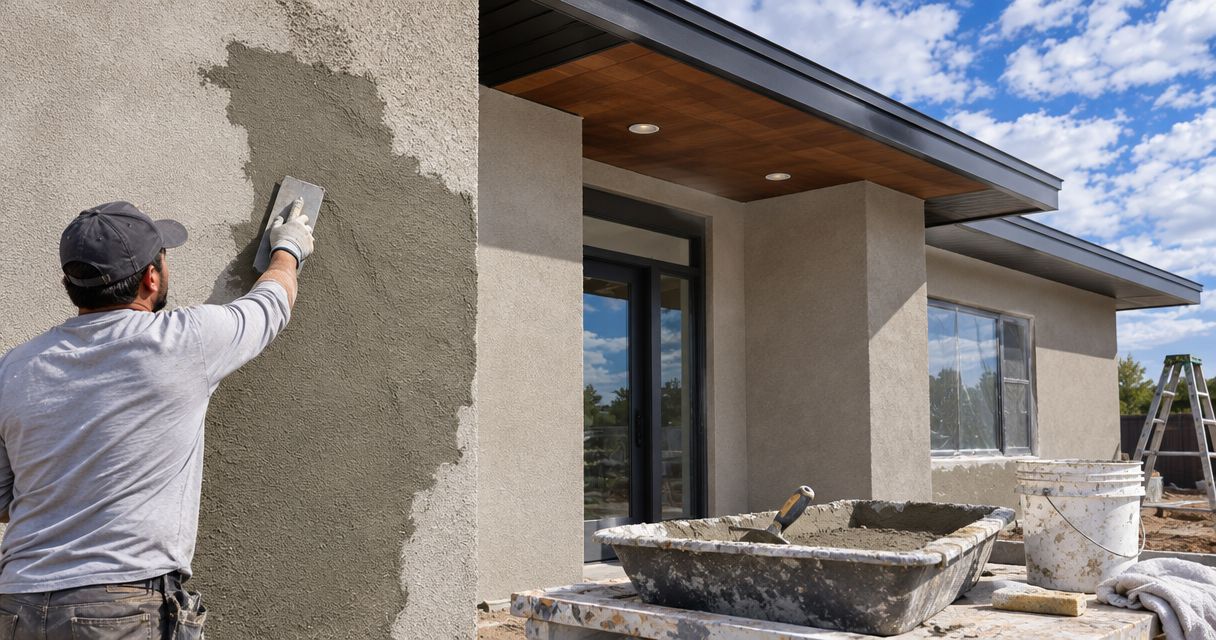
House flippers’ stucco restoration is the assessment, repair, and renewal of a property’s stucco exterior with the aim of preparing the home for resale. For Phoenix projects in 2026, choose the scope before the finish: a localized defect calls for a different plan than widespread deterioration or a full exterior redesign.
- Stucco restoration for house flippers starts with identifying whether damage is localized or requires a broader assessment.
- AZ Stucco Solutions LLC serves Phoenix property owners needing stucco installation, re-stucco, repair, and exterior restoration.
- Compare written preparation, repair, and finish scopes before choosing a contractor.
- Approve a finish sample and document concealed-work decisions before preparing the property for listing.
Why stucco restoration matters for house flippers
Your exterior work has to solve a building problem and support a resale presentation. Those goals overlap, but they are not interchangeable: a consistent finish does not establish that the wall underneath is sound.
Flippers also coordinate roof work, replacement windows, landscaping, and exterior painting. Set the stucco scope before those trades finish their work, so everyone understands which surfaces and connections remain unfinished.
AZ Stucco Solutions LLC is a fit for Phoenix house flippers seeking residential stucco installation, re-stucco, and restoration. The stucco installation and restoration services cover residential and commercial properties; Flavio Miguel Delgado brings over 30 years of construction experience specializing in stucco. That experience belongs to the owner, not the age of the business.
The practical goal is a clear scope you can explain to your contractor, project partners, and eventual buyer. Do not make a cosmetic decision carry the burden of a condition assessment.
Plan your restoration before choosing the finish
Use the following sequence for your 2026 renovation plan. Start with a simple property record you can create yourself, then bring in a stucco contractor to define work that requires professional assessment and installation.
Document the exterior before demolition
Begin with a phone camera, a property sketch, and a room-by-room list of planned exterior changes. Take at least 4 elevation photos, plus close-ups of visible concerns, so contractors can connect each defect to its location.
Record observations rather than diagnoses. Write “staining below window” instead of deciding that the window leaks, and “crack beside opening” instead of declaring structural damage. Visible conditions help direct an assessment; they do not establish the cause by themselves.
Keep this record separate from your listing photography. It is a working file for estimating, trade coordination, and documenting changes during construction.
- Photograph each exterior elevation before removing fixtures or finishes.
- Mark cracks, staining, loose areas, and previous patches on your sketch.
- Identify planned window, door, roof-edge, and utility changes.
- Save available records of earlier exterior repairs.
- Note which areas require closer professional inspection.
Separate localized repairs from broader restoration
Organize your observations into isolated concerns and repeated conditions across the exterior. This is a free planning exercise, not permission to cover damage or remove material without understanding the wall assembly.
A localized repair is appropriate when assessment supports a limited defect and a sound surrounding area. Repeated cracking, loose material, staining, or extensive previous patching warrants a broader assessment—not an automatic full re-stucco recommendation.
Choose the smallest scope that addresses the identified condition completely. Full re-stucco belongs in the discussion when the condition and desired exterior result justify broader work. Ask the contractor to explain what remains in place, what comes off, and why.
- Group isolated defects separately from recurring patterns.
- Ask whether the surrounding stucco is suitable to retain.
- Identify conditions requiring investigation before finishing.
- Distinguish appearance changes from corrective work.
- Request an explanation for any proposed full-wall treatment.
Request comparable written scopes
Create one project brief and give the same information to each contractor. You do not need specialist estimating software: a shared document with photos, planned alterations, and your desired finish is enough to start a useful conversation.
AZ Stucco Solutions LLC provides free residential stucco estimates. Use the contact page to request an assessment, and describe whether you are considering full re-stucco, new installation around alterations, or a smaller repair scope.
For your 2026 estimate file, separate 3 scope alternatives where applicable: localized repair, broader resurfacing or re-stucco, and removal with new installation. Not every house needs all three quoted; the point is to understand why one approach fits and another does not.
- Identify the walls, openings, and other areas included.
- Specify removal, preparation, repair, and finish work separately.
- Record what existing material the contractor proposes to retain.
- Clarify protection, access, debris removal, and cleanup responsibilities.
- Define how concealed damage changes the written scope.
Coordinate preparation with the other trades
Put your construction sequence on paper before booking finish work. List the exterior tasks that alter openings, penetrate walls, or affect adjacent surfaces, then ask the responsible trades to agree on handoffs.
Preparation is part of the stucco project, not an invisible allowance. The estimate should explain how the existing surface will be assessed and prepared, and how incompatible, loose, or otherwise unsuitable material will be handled. Installation requirements depend on the selected assembly and materials.
Ask questions about roof-to-wall connections, windows, doors, and penetrations without prescribing a repair from photographs. These connections deserve coordinated assessment because stucco finish work alone does not define how the complete exterior manages water.
- Confirm planned changes to windows, doors, and wall penetrations.
- Identify who handles each roof and wall connection.
- Agree on protection for glazing, paving, plants, and fixtures.
- Require installation to follow applicable material instructions and local requirements.
- Set a written approval process for newly exposed conditions.
A useful handoff record separates observation, scope, preparation, and finish approval. Keep those decisions visible to everyone coordinating the exterior rather than burying them in a text-message thread.

Approve the texture and color on a sample
Start with photographs of the house and a short finish brief: architectural style, retained surfaces, desired texture, and any applicable association requirements. Choose a finish that belongs on the whole property rather than selecting an isolated swatch because it looks current.
Require 1 approved sample area before broad finish application. Record the selected texture, color reference, and approval in your 2026 project file. Compare the sample with adjacent walls, trim, roofing, and hardscape under the property’s actual daylight.
For a partial repair, discuss blending expectations directly. A repaired area and an aged surrounding wall are different starting points; the agreement should describe whether the work ends at the patch, a defined wall section, or an entire elevation.
- Compare the proposed texture with retained exterior surfaces.
- Review color alongside roofing, trim, and paving.
- Confirm any required association approval before application.
- Record the sample approval and intended finish boundaries.
- Ask how visible transitions will be handled.
A sample should help you judge texture and its relationship to neighboring surfaces. The illustration below shows that review concept, not a completed company project or a customer property.

Close out the work before listing
Build your handoff file yourself using the agreed scope, approved changes, finish selections, and completion photographs. Ask the contractor to review outstanding items with you rather than treating the final photograph as the entire inspection.
For your 2026 listing preparation, describe completed work accurately. Localized repairs are not full re-stucco, and a new finish coat does not by itself establish that every layer of the exterior was replaced.
Any craftsmanship warranty is governed by the customer’s written agreement. Read the actual coverage, dates, exclusions, and obligations; do not turn a conversation into a promise in your sales materials.
- Walk each included elevation against the written scope.
- Record remaining touch-ups and agreed follow-up work.
- Save approved changes and material or finish information.
- Keep photographs without exposing private property documents publicly.
- Use accurate descriptions when answering buyer questions.
Compare restoration options for a flip
Match the treatment to the assessed condition, not the listing deadline. These options address different scopes; they are not interchangeable shortcuts to the same result. Ask the contractor to define terms such as “resurfacing” and “re-stucco” in the agreement because the work included matters more than the label.
| Option | Best for | Main advantage | Key limitation |
|---|---|---|---|
| Localized stucco repair | Isolated defects with suitable surrounding material | Limits work to the assessed problem area | Texture and color transitions need explicit agreement |
| Broader resurfacing or re-stucco | A more consistent exterior where the retained assembly is suitable | Addresses a larger finish area rather than separate patches | Does not eliminate the need to assess underlying conditions |
| Removal and new stucco installation | Areas where assessment calls for replacement of existing work | Allows the replacement scope to address exposed conditions | Requires more demolition and coordination with adjacent work |
| Painting or compatible coating | An appearance update on a suitably prepared, sound surface | Changes the exterior appearance without redefining the whole assembly | Does not replace necessary repairs or correct unresolved underlying damage |
AZ Stucco Solutions LLC offers stucco restoration, repair, re-stucco, and installation for Phoenix-area properties. The right service still depends on a property assessment; a service list is not a diagnosis, and this guide cannot establish which wall materials should remain.
Common mistakes house flippers make
Treating every crack as a full re-stucco project
A crack is an observation, not a complete scope. Ask what caused concern, what surrounding material was assessed, and why the proposed treatment fits. Broader work needs an explanation beyond “there are cracks.”
Choosing the finish before defining the repairs
Texture and color decisions are easier to picture than preparation, so they can dominate the conversation. Reverse that order. Establish repair boundaries and retained materials first, then approve the appearance of the completed scope.
Comparing estimates by the headline total alone
An estimate that includes removal and preparation is not equivalent to one describing finish application only. Compare inclusions, exclusions, concealed-condition procedures, and finish boundaries line by line before selecting a proposal.
Finishing walls before exterior alterations are settled
A late window change or added wall penetration creates another coordination task after finish work. Confirm those decisions early and make each trade’s responsibilities explicit. Do not ask the stucco contractor to guess what another trade will change.
Overstating the renovation in the listing
Keep “repaired,” “resurfaced,” and “replaced” distinct in your records and marketing. Accurate wording protects the usefulness of your handoff file and gives buyers a clear account of the work actually completed.
FAQ
What is the best approach to stucco restoration for house flippers?
Start with a condition assessment, then choose the scope that addresses the identified problems. Compare preparation, repair boundaries, finish expectations, and concealed-condition procedures before approving work.
Does every stucco crack mean the house needs re-stuccoing?
No, a stucco crack does not automatically require full re-stuccoing. A localized repair is appropriate when assessment supports a limited defect and suitable surrounding material; recurring or widespread concerns need broader evaluation.
Is re-stucco better than patching before selling a house?
Re-stucco is not automatically better than patching. Localized repair suits isolated defects, while broader work needs justification based on the exterior’s condition and the desired finish scope.
Can I paint over damaged stucco before listing?
Do not use paint as a substitute for assessing and repairing damaged stucco. Painting or a compatible coating belongs after the surface condition, preparation, and necessary repairs have been addressed.
What should a stucco restoration estimate include?
A stucco restoration estimate should define included areas, removal, preparation, repairs, finish work, protection, cleanup, and exclusions. It should also explain how concealed damage and changes to the agreed scope will be handled.
Who can assess a stucco restoration project in Phoenix?
AZ Stucco Solutions LLC serves Phoenix property owners with residential stucco repair, re-stucco, installation, and exterior restoration services. Request a property-specific assessment rather than selecting a scope from photographs alone.
What records should I keep after restoring stucco on a flip?
Keep the written scope, approved changes, finish selection, completion photographs, and any applicable written warranty. Describe the completed work accurately when preparing listing materials and answering buyer questions.
One last thing
Define where each repair ends before work starts. A patch, a wall section, and a full elevation are different finish boundaries, even when they address the same visible defect. Mark those boundaries on photographs and attach them to the agreement.
That simple record gives your contractor a clearer target and gives you something concrete to review at completion. To discuss a Phoenix residential restoration project, call (480) 971-9500 and request an estimate.
Leave a Reply